Some people see disability as a reason to hate or reject someone, while others treat it as a fault that a person should be punished for. But Ilham never chose the way she was born. She was born with a condition that prevented her from speaking and walking like other children, but that never stopped her from being a person with intelligence, emotions, and a heart.
From a little girl whom children mocked at the entrance of her home to an orphan who lost her parents, her home, and everyone who could protect her, Ilham's life became a journey filled with tears, cruelty, loss, and endurance. What makes her story even more painful is that the people who should have shown her compassion were often the ones who turned her into an object of ridicule.
But destiny has its own ways, and no one can predict where they will lead.
When Ilham's life crosses paths with Anwar, a handsome young man blessed with wealth, status, privilege, and pride, everything begins to change. Can love break through the walls of hatred and prejudice? Or will Anwar be forced to face the consequences of laughing at one of Allah's creations?
Story Summary
The story begins with Ilham Bukar Shetima, an eight year old girl who was born with a condition that affects the way she walks, uses her hands, and speaks. Although she is capable of understanding things, her speech difficulties and physical condition cause many people to assume that she is incapable of doing anything. The neighborhood children tease her, laugh at her, and some even reject her. Because of her condition, laughing is often the only way she can express herself. This causes people to treat her even more like an object of amusement rather than a human being with feelings and dignity.
Ilham's parents, Malam Bukar and Maryam, do everything they can to protect her. They send her to school alongside her younger sister, Ameera, and despite all the challenges she faces, Ilham is capable of understanding her lessons. Her greatest difficulty is that she cannot express what is in her heart in the same way other people can. Ameera becomes both her companion and her protector, while her mother, Maryam, continues to believe that Allah gave Ilham to her and that only Allah knows what He has destined for her. This faith allows the family to remain patient despite the cruelty they experience.
Then one day, financial problems force the family to lose their home. After being evicted from the house they were renting, Malam Bukar takes his family in search of another place to stay. During this journey, a tragic accident changes everything. Malam Bukar loses his life, while Maryam suffers a stroke before eventually passing away as well. In the confusion that follows, Ameera ends up in the care of people who are able to help her, but Ilham is left by the roadside without anyone to look after her. This marks the beginning of an entirely new and painfully dark chapter in her life.
Ilham finds herself alone on the streets of Kano, without parents, a home, or anyone to protect her. She follows some almajiri children without fully understanding where they are going, eventually finding herself in a vehicle that takes her to Kano. Hunger, dirt, and neglect make her situation even worse. People begin to assume that she is mentally unstable. Some drive her away, others humiliate her, and some even beat her. Years pass, and Ilham continues to live on the streets as her condition and circumstances become increasingly difficult. Yet beneath everything, the story makes it clear that her intelligence has not disappeared as people assume.
On the other side of the story is Anwar Umar Mutallib, the son of a powerful leader, a young man with education, good looks, wealth, and social status. His life is completely different from Ilham's. Anwar grows up surrounded by privilege, but his personality and pride make him look down on people without considering what they feel. When he first encounters Ilham, he has no idea how important this girl will eventually become in his life. From laughing at the way she walks to a plan made by his father that brings their lives together, Anwar begins to face a powerful lesson about the consequences of disrespecting one of Allah's creations.
Genre
ALLAH GATAN BAWA combines several genres. It contains drama, family drama, social drama, emotional fiction, suspense, and romance, alongside themes involving religion, destiny, and society.
One of the book's greatest strengths is the way it uses Ilham's life to highlight the contrast between a person born into privilege and someone who has been denied every form of privilege. The story also explores the challenges faced by people with disabilities, particularly the way society can turn disability into a source of ridicule, rejection, and discrimination.
Setting
The story moves through different locations in Nigeria, particularly Maiduguri, Kano, Wudil, and Abuja.
Maiduguri and areas affected by conflict play an important role in the early part of the story, showing how violence and instability can tear families apart and force people to flee their homes.
Kano becomes a major setting in Ilham's life. It is where she experiences the harshest realities of life on the streets, including hunger, homelessness, neglect, and rejection from society.
Abuja becomes another major turning point in the story. It is here that Ilham's life becomes connected to the household of a powerful and influential man, bringing two completely different worlds into collision.
Major Themes
Disability and Society's Perception of It
One of the central themes of the book is society's treatment of people with disabilities. Ilham never asked to be born with her condition, yet she becomes the target of rejection and ridicule. The book raises an important question for the reader: Does a person deserve to be hated or rejected because of the way Allah created them?
Destiny and the Power of Allah
The title of the book itself carries a powerful message. When everything falls apart, Ilham has no one left to depend on except Allah. Her family loses everything, and she loses her parents, her home, and her protection. Yet her life does not end there.
Cruelty and Compassion
The book shows how a single word, a single laugh, or one act of cruelty can deeply hurt someone who has no ability to defend themselves. At the same time, it shows how one small act of kindness from a single person can completely transform another person's life.
Faith and Patience
Maryam is one of the characters who understands that not everything a person cannot fix means they should stop hoping for something good. She continues to see Ilham as a gift from Allah rather than something to be ashamed of.
The Contrast Between Lives
Ilham and Anwar represent two completely different worlds. One grows up surrounded by hardship, while the other grows up surrounded by privilege. One searches for food on the streets, while the other lives in a secure and wealthy environment. The collision of their lives becomes one of the most compelling aspects of the story.
The Lesson of Pride
Anwar begins the story as someone who is overly confident and does not consider certain people worthy of importance. However, the events that follow force him to look at himself and his behavior from an entirely different perspective.
Main Characters
Ilham Bukar Shetima
Ilham is the heart of the story. She is a girl born with a disability whom people fail to understand or recognize for who she truly is. Despite everything she suffers, she possesses an innocence that makes readers feel deeply for her. Her life forms the foundation of the entire story.
Anwar Umar Mutallib
Anwar is the son of a powerful man. He is handsome, educated, wealthy, and influential. However, at the beginning of the story, his pride and attitude prevent him from treating certain people with the respect they deserve. His encounter with Ilham forces him to confront a side of life he never imagined he would experience.
Malam Bukar Shetima
Ilham's father is a hardworking man who wants to protect his family despite having limited resources. He carries the responsibility of providing for his family, works to ensure that his children receive an education, and sees Ilham as a trust and responsibility given to him by Allah.
Maryam
Maryam is Ilham's mother and a woman of patience and compassion. Her love for her daughter is not dependent on her physical condition. She understands better than anyone that Ilham did not choose the way she was created.
Ameera
Ameera is Ilham's younger sister and one of the people closest to her. From childhood, she tries to protect Ilham from the cruelty and teasing of others. Even after they are separated, she never stops thinking about Ilham.
Dady
Anwar's father is a powerful and influential man, but he possesses a compassionate side that becomes increasingly visible after he understands Ilham's situation. He is one of the first people to recognize the person behind Ilham's disability, and this understanding leads him to take a decision that will change the lives of many people.
Inna Ladi
Inna Ladi is one of the people who shows Ilham genuine care and compassion. She helps improve Ilham's circumstances, takes care of her, and recognizes that there is something within Ilham that many other people have failed to see.
What Makes the Story Different
What makes ALLAH GATAN BAWA particularly compelling is the way it brings together the life of a girl abandoned by society and the life of a young man who possesses almost everything a person could ask for.
Ilham possesses something Anwar lacks: resilience and a lack of cruelty despite all the suffering she has endured. Anwar, on the other hand, possesses privilege, education, and status, but he needs a powerful lesson to understand the value of what Allah has created.
The book also builds a powerful question in the reader's mind: Can the person who is despised today become the person everyone respects tomorrow?
Analytics and Insight
Based on the story, ALLAH GATAN BAWA has strong appeal for Hausa novel readers who enjoy stories filled with emotion, conflict, family struggles, destiny, romance, and dramatic changes in a character's life.
One of the strongest elements that can keep readers turning the pages is the question of what will happen to Ilham. Will she ever find her family again? Will she escape the difficult life she has been forced into? Will Ameera ever be reunited with her? And what will happen when Anwar realizes that the person he once laughed at has a special place in his life?
The story also uses differences in social status to create suspense. On one side is a girl who has no powerful voice in society, while on the other is a young man whom almost everyone respects or fears because of his position. When their paths finally cross, this contrast creates a powerful reason for readers to keep wondering how their story will unfold.
From a social perspective, the book can encourage readers to think deeply about how people with disabilities are treated. It does not simply ask society to feel sorry for them. It asks society to understand them as human beings who have feelings, thoughts, abilities, and dignity.
An Important Lesson
One of the most important lessons in the story is that people should never judge someone solely by what they see with their eyes.
Ilham is like a book that people judged without ever opening its pages. They saw her disability, the way she drooled, the way she walked, and the way she spoke, and then decided that she was useless. Yet there was an entire part of her life that nobody took the time to discover.
The story reminds readers that a person's worth is not determined only by beauty, wealth, status, or physical ability. Often, what matters most is hidden within a person's heart and character.
Quote From the Story's Central Message
"Allah created her the way she is, and only He knows why He chose this destiny for her. What people call a disability may be the very path Allah has chosen to lead her toward a blessing they cannot yet see."
Why You Should Read It
If you enjoy a story that can make you feel compassion, anger, surprise, and reflection all at once, ALLAH GATAN BAWA has plenty to keep you emotionally invested.
Ilham's story is not simply a story about disability. It is a story about destiny, family, cruelty, patience, faith, pride, and how quickly a person's life can change.
From a girl abandoned by the roadside to a young woman who finds herself entering a world she never imagined, one question remains: What has Allah destined for Ilham after everything she has endured?
And when Anwar finally understands the true value of the person he once looked down upon, will he be able to repair what he has already damaged?
Read ALLAH GATAN BAWA to discover where Ilham's destiny will take her and what lessons life will ultimately teach Anwar.




![<? $row['name']; ?>](https://booktoknovels.com/Public/thumb/225x325/ebook/2026/01/thumb-920512585989.webp)
![<? $row['name']; ?>](https://booktoknovels.com/Public/thumb/225x325/ebook/2026/01/thumb-108728368255.webp)
![<? $row['name']; ?>](https://booktoknovels.com/Public/thumb/225x325/ebook/2026/01/thumb-949891906361.webp)
![<? $row['name']; ?>](https://booktoknovels.com/Public/thumb/225x325/ebook/2026/01/thumb-596280087818.webp)
![<? $row['name']; ?>](https://booktoknovels.com/Public/thumb/225x325/ebook/2026/01/thumb-173293332745.webp)
![<? $row['name']; ?>](https://booktoknovels.com/Public/thumb/225x325/ebook/2026/01/thumb-880926466422.webp)
![<? $row['name']; ?>](https://booktoknovels.com/Public/thumb/225x325/ebook/2026/01/thumb-893168548926.webp)
![<? $row['name']; ?>](https://booktoknovels.com/Public/thumb/225x325/ebook/2026/01/thumb-936868186146.webp)
![<? $row['name']; ?>](https://booktoknovels.com/Public/thumb/225x325/ebook/2026/01/thumb-734427937651.webp)
![<? $row['name']; ?>](https://booktoknovels.com/Public/thumb/225x325/ebook/2026/01/thumb-885497082027.webp)
![<? $row['name']; ?>](https://booktoknovels.com/Public/thumb/225x325/ebook/2026/01/thumb-898860904759.webp)
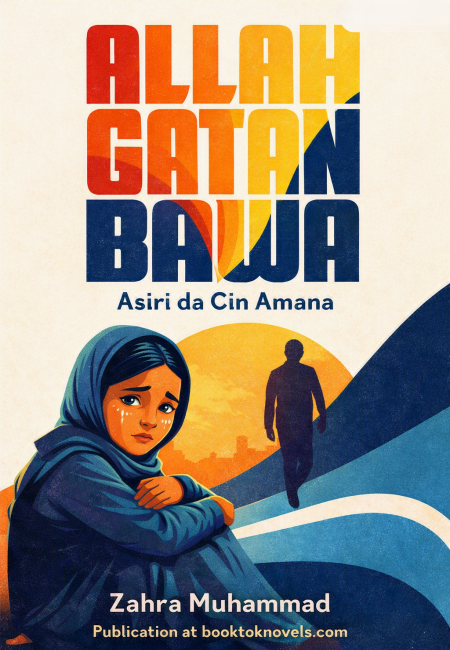
ALLAH GATAN BAWA
Author: Zahra Muhammad Mahmud
Hook
Some people see disability as a reason to hate or reject someone, while others treat it as a fault that a person should be punished for. But Ilham never chose the way she was born. She was born with a condition that prevented her from speaking and walking like other children, but that never stopped her from being a person with intelligence, emotions, and a heart.
From a little girl whom children mocked at the entrance of her home to an orphan who lost her parents, her home, and everyone who could protect her, Ilham's life became a journey filled with tears, cruelty, loss, and endurance. What makes her story even more painful is that the people who should have shown her compassion were often the ones who turned her into an object of ridicule.
But destiny has its own ways, and no one can predict where they will lead.
When Ilham's life crosses paths with Anwar, a handsome young man blessed with wealth, status, privilege, and pride, everything begins to change. Can love break through the walls of hatred and prejudice? Or will Anwar be forced to face the consequences of laughing at one of Allah's creations?
Story Summary
The story begins with Ilham Bukar Shetima, an eight year old girl who was born with a condition that affects the way she walks, uses her hands, and speaks. Although she is capable of understanding things, her speech difficulties and physical condition cause many people to assume that she is incapable of doing anything. The neighborhood children tease her, laugh at her, and some even reject her. Because of her condition, laughing is often the only way she can express herself. This causes people to treat her even more like an object of amusement rather than a human being with feelings and dignity.
Ilham's parents, Malam Bukar and Maryam, do everything they can to protect her. They send her to school alongside her younger sister, Ameera, and despite all the challenges she faces, Ilham is capable of understanding her lessons. Her greatest difficulty is that she cannot express what is in her heart in the same way other people can. Ameera becomes both her companion and her protector, while her mother, Maryam, continues to believe that Allah gave Ilham to her and that only Allah knows what He has destined for her. This faith allows the family to remain patient despite the cruelty they experience.
Then one day, financial problems force the family to lose their home. After being evicted from the house they were renting, Malam Bukar takes his family in search of another place to stay. During this journey, a tragic accident changes everything. Malam Bukar loses his life, while Maryam suffers a stroke before eventually passing away as well. In the confusion that follows, Ameera ends up in the care of people who are able to help her, but Ilham is left by the roadside without anyone to look after her. This marks the beginning of an entirely new and painfully dark chapter in her life.
Ilham finds herself alone on the streets of Kano, without parents, a home, or anyone to protect her. She follows some almajiri children without fully understanding where they are going, eventually finding herself in a vehicle that takes her to Kano. Hunger, dirt, and neglect make her situation even worse. People begin to assume that she is mentally unstable. Some drive her away, others humiliate her, and some even beat her. Years pass, and Ilham continues to live on the streets as her condition and circumstances become increasingly difficult. Yet beneath everything, the story makes it clear that her intelligence has not disappeared as people assume.
On the other side of the story is Anwar Umar Mutallib, the son of a powerful leader, a young man with education, good looks, wealth, and social status. His life is completely different from Ilham's. Anwar grows up surrounded by privilege, but his personality and pride make him look down on people without considering what they feel. When he first encounters Ilham, he has no idea how important this girl will eventually become in his life. From laughing at the way she walks to a plan made by his father that brings their lives together, Anwar begins to face a powerful lesson about the consequences of disrespecting one of Allah's creations.
Genre
ALLAH GATAN BAWA combines several genres. It contains drama, family drama, social drama, emotional fiction, suspense, and romance, alongside themes involving religion, destiny, and society.
One of the book's greatest strengths is the way it uses Ilham's life to highlight the contrast between a person born into privilege and someone who has been denied every form of privilege. The story also explores the challenges faced by people with disabilities, particularly the way society can turn disability into a source of ridicule, rejection, and discrimination.
Setting
The story moves through different locations in Nigeria, particularly Maiduguri, Kano, Wudil, and Abuja.
Maiduguri and areas affected by conflict play an important role in the early part of the story, showing how violence and instability can tear families apart and force people to flee their homes.
Kano becomes a major setting in Ilham's life. It is where she experiences the harshest realities of life on the streets, including hunger, homelessness, neglect, and rejection from society.
Abuja becomes another major turning point in the story. It is here that Ilham's life becomes connected to the household of a powerful and influential man, bringing two completely different worlds into collision.
Major Themes
Disability and Society's Perception of It
One of the central themes of the book is society's treatment of people with disabilities. Ilham never asked to be born with her condition, yet she becomes the target of rejection and ridicule. The book raises an important question for the reader: Does a person deserve to be hated or rejected because of the way Allah created them?
Destiny and the Power of Allah
The title of the book itself carries a powerful message. When everything falls apart, Ilham has no one left to depend on except Allah. Her family loses everything, and she loses her parents, her home, and her protection. Yet her life does not end there.
Cruelty and Compassion
The book shows how a single word, a single laugh, or one act of cruelty can deeply hurt someone who has no ability to defend themselves. At the same time, it shows how one small act of kindness from a single person can completely transform another person's life.
Faith and Patience
Maryam is one of the characters who understands that not everything a person cannot fix means they should stop hoping for something good. She continues to see Ilham as a gift from Allah rather than something to be ashamed of.
The Contrast Between Lives
Ilham and Anwar represent two completely different worlds. One grows up surrounded by hardship, while the other grows up surrounded by privilege. One searches for food on the streets, while the other lives in a secure and wealthy environment. The collision of their lives becomes one of the most compelling aspects of the story.
The Lesson of Pride
Anwar begins the story as someone who is overly confident and does not consider certain people worthy of importance. However, the events that follow force him to look at himself and his behavior from an entirely different perspective.
Main Characters
Ilham Bukar Shetima
Ilham is the heart of the story. She is a girl born with a disability whom people fail to understand or recognize for who she truly is. Despite everything she suffers, she possesses an innocence that makes readers feel deeply for her. Her life forms the foundation of the entire story.
Anwar Umar Mutallib
Anwar is the son of a powerful man. He is handsome, educated, wealthy, and influential. However, at the beginning of the story, his pride and attitude prevent him from treating certain people with the respect they deserve. His encounter with Ilham forces him to confront a side of life he never imagined he would experience.
Malam Bukar Shetima
Ilham's father is a hardworking man who wants to protect his family despite having limited resources. He carries the responsibility of providing for his family, works to ensure that his children receive an education, and sees Ilham as a trust and responsibility given to him by Allah.
Maryam
Maryam is Ilham's mother and a woman of patience and compassion. Her love for her daughter is not dependent on her physical condition. She understands better than anyone that Ilham did not choose the way she was created.
Ameera
Ameera is Ilham's younger sister and one of the people closest to her. From childhood, she tries to protect Ilham from the cruelty and teasing of others. Even after they are separated, she never stops thinking about Ilham.
Dady
Anwar's father is a powerful and influential man, but he possesses a compassionate side that becomes increasingly visible after he understands Ilham's situation. He is one of the first people to recognize the person behind Ilham's disability, and this understanding leads him to take a decision that will change the lives of many people.
Inna Ladi
Inna Ladi is one of the people who shows Ilham genuine care and compassion. She helps improve Ilham's circumstances, takes care of her, and recognizes that there is something within Ilham that many other people have failed to see.
What Makes the Story Different
What makes ALLAH GATAN BAWA particularly compelling is the way it brings together the life of a girl abandoned by society and the life of a young man who possesses almost everything a person could ask for.
Ilham possesses something Anwar lacks: resilience and a lack of cruelty despite all the suffering she has endured. Anwar, on the other hand, possesses privilege, education, and status, but he needs a powerful lesson to understand the value of what Allah has created.
The book also builds a powerful question in the reader's mind: Can the person who is despised today become the person everyone respects tomorrow?
Analytics and Insight
Based on the story, ALLAH GATAN BAWA has strong appeal for Hausa novel readers who enjoy stories filled with emotion, conflict, family struggles, destiny, romance, and dramatic changes in a character's life.
One of the strongest elements that can keep readers turning the pages is the question of what will happen to Ilham. Will she ever find her family again? Will she escape the difficult life she has been forced into? Will Ameera ever be reunited with her? And what will happen when Anwar realizes that the person he once laughed at has a special place in his life?
The story also uses differences in social status to create suspense. On one side is a girl who has no powerful voice in society, while on the other is a young man whom almost everyone respects or fears because of his position. When their paths finally cross, this contrast creates a powerful reason for readers to keep wondering how their story will unfold.
From a social perspective, the book can encourage readers to think deeply about how people with disabilities are treated. It does not simply ask society to feel sorry for them. It asks society to understand them as human beings who have feelings, thoughts, abilities, and dignity.
An Important Lesson
One of the most important lessons in the story is that people should never judge someone solely by what they see with their eyes.
Ilham is like a book that people judged without ever opening its pages. They saw her disability, the way she drooled, the way she walked, and the way she spoke, and then decided that she was useless. Yet there was an entire part of her life that nobody took the time to discover.
The story reminds readers that a person's worth is not determined only by beauty, wealth, status, or physical ability. Often, what matters most is hidden within a person's heart and character.
Quote From the Story's Central Message
"Allah created her the way she is, and only He knows why He chose this destiny for her. What people call a disability may be the very path Allah has chosen to lead her toward a blessing they cannot yet see."
Why You Should Read It
If you enjoy a story that can make you feel compassion, anger, surprise, and reflection all at once, ALLAH GATAN BAWA has plenty to keep you emotionally invested.
Ilham's story is not simply a story about disability. It is a story about destiny, family, cruelty, patience, faith, pride, and how quickly a person's life can change.
From a girl abandoned by the roadside to a young woman who finds herself entering a world she never imagined, one question remains: What has Allah destined for Ilham after everything she has endured?
And when Anwar finally understands the true value of the person he once looked down upon, will he be able to repair what he has already damaged?
Read ALLAH GATAN BAWA to discover where Ilham's destiny will take her and what lessons life will ultimately teach Anwar.