Intisaar has grown up in a house where she is loved by a few, tolerated by some, and openly despised by others. Raised by a mother whose past is filled with unanswered questions, Intisaar learns early that belonging to a family does not always mean being accepted by it. Between cruel words, humiliation, family rivalry, and a childhood shaped by the absence of her biological father, she survives by keeping her head down and her heart guarded.
But life begins to change when Dr. Faruuq enters her world.
What starts with awkward encounters, reluctant conversations, and a phone number given without her permission slowly develops into something Intisaar never expected. Faruuq sees beyond the walls surrounding her. Yet just when she begins to believe that perhaps she can finally experience happiness, the secrets surrounding her family, her mother's past, and the people connected to her threaten to complicate everything.
INTISAAR is not simply a love story. It is a story about a young woman searching for dignity, identity, family, and a place where her heart can finally feel safe.
Summary
Intisaar lives with her mother and younger sister, Ihsaan, in a complicated household dominated by family tension and resentment. Although she has learned to endure the insults directed at her and her mother, the constant hostility from members of the extended family leaves deep wounds that she rarely allows anyone to see. She responds to humiliation with silence, patience, and an occasional smile, but beneath that calm exterior is a young woman carrying years of unanswered questions and emotional pain.
Her difficult upbringing becomes clearer when she eventually reveals the truth about her mother's past. Her mother, once abandoned and separated from her own family, was found in desperate circumstances and brought into the care of Inna, a woman whose compassion eventually changes both their lives. Intisaar grows up believing that Inna is her grandmother, only to discover the complicated circumstances surrounding her birth and the disappearance of her biological father. Her mother's eventual marriage to Alhaji Abubakar brings them into a new household, but instead of giving them the peaceful family they hoped for, it places them among people who never fully accept their presence.
Inside this household, Intisaar faces hostility from several family members. She is insulted, mistreated, and repeatedly reminded that she does not belong. Even when conflicts become severe enough to divide the family, she continues trying to avoid confrontation. Her relationship with Inna, however, provides an important source of protection and affection. Haisam, her stepbrother, also treats her with genuine care, regarding her as a younger sister rather than someone who should be excluded from the family.
Then Dr. Faruuq appears. Their first encounters are far from romantic. Intisaar is uncomfortable with his attention and repeatedly tries to keep her distance. Faruuq, however, remains persistent without forcing her to accept him. His kindness, patience, humor, and growing interest gradually break through her defenses. Their conversations become more frequent, and Intisaar slowly finds herself looking forward to hearing from him. What she initially considers an unwanted distraction begins to develop into a genuine emotional connection.
Faruuq eventually asks Intisaar to tell him about her life, and the request opens a door to the painful history she has spent years carrying. As she recounts her childhood, her mother's abandonment, her father's absence, the hostility within the household, and the complicated relationships that shaped her upbringing, Faruuq begins to understand that the quiet girl he has fallen for carries far more than what he sees on the surface. Yet even as their relationship moves toward something more serious, the question of whether Intisaar's family will accept their relationship remains unresolved. Her past has already complicated her present, and the future may demand choices neither of them is prepared to make.
Genre and Setting
INTISAAR is a Hausa family drama and romance built around emotional conflict, domestic tension, hidden family history, and the gradual development of love. Its romantic storyline is intertwined with a much larger exploration of family relationships, belonging, social pressure, resentment, loyalty, and the emotional consequences of childhood experiences.
The story is primarily set within a large family compound in Kano, where several households exist under the same extended family structure. The compound becomes more than simply a physical setting. It represents the complicated relationships that bind the characters together while simultaneously keeping their conflicts alive. School, the hospital, neighborhood streets, shops, and family gatherings expand the world beyond the compound, while conversations between relatives repeatedly bring the story back to the emotional center of Intisaar's life.
The cultural environment is strongly rooted in Hausa Muslim family life. Prayer, schooling, marriage expectations, respect for elders, extended-family responsibilities, and traditional ideas about family hierarchy all influence the characters' decisions.
Core Themes
At its heart, INTISAAR explores the difference between being surrounded by people and actually feeling accepted. Intisaar lives among relatives, yet she frequently experiences the loneliness of someone treated as an outsider. Her experiences demonstrate how repeated insults and rejection can shape a person's confidence without necessarily destroying their ability to remain kind.
Family is another major theme. The novel presents family as both a source of protection and a source of pain. Inna becomes an important maternal figure through her compassion and determination to protect those she considers hers, while other family members use their position within the household to create fear and division. The story asks an important question: what truly makes someone family, blood or the way they choose to treat another person?
The novel also explores identity and the consequences of hidden truths. Intisaar's understanding of herself changes when she discovers more about her mother's past and the circumstances surrounding her own upbringing. Her relationship with Faruuq further forces her to confront parts of herself that she has kept hidden.
Love and emotional trust form another central theme. Faruuq's relationship with Intisaar does not develop instantly. It grows through conversations, patience, curiosity, and his willingness to understand her past. His interest introduces a new possibility into a life that has largely been defined by endurance.
Above all, INTISAAR examines resilience. Intisaar repeatedly experiences situations that could make her bitter, yet she continues to show affection toward the people she loves and maintains her composure even when others attempt to humiliate her.
Key Characters
Intisaar is the emotional center of the story. She is quiet, patient, sensitive, and remarkably resilient. Her tendency to avoid confrontation is not a sign that she is weak. Instead, it reflects years of learning how to survive in an environment where speaking too much can create even more problems. Her journey is largely about discovering that she deserves love, respect, and a life beyond the limitations others have placed around her.
Dr. Faruuq enters Intisaar's life as an unexpected complication and gradually becomes someone much more important. He is confident, humorous, observant, and genuinely interested in understanding her. His attraction to Intisaar develops into something deeper as he discovers the painful history behind her reserved personality. His willingness to listen becomes one of the most significant aspects of their relationship.
Momy, Intisaar's mother, is a woman whose life has been shaped by abandonment, uncertainty, patience, and sacrifice. Her past explains much of the emotional atmosphere surrounding Intisaar. Despite her own suffering, she remains protective of her children and chooses endurance over unnecessary confrontation.
Inna is one of the strongest maternal figures in the story. Her relationship with Intisaar and her mother demonstrates that love can be created through compassion rather than biology alone. She becomes a source of protection, wisdom, and emotional security for Intisaar.
Haisam treats Intisaar with genuine affection and sees her as a sister. His presence provides one of the few examples of healthy family affection within a household otherwise dominated by rivalry and hostility.
Kursum, Khadija, Fadila, Rahma, and the other members of the extended household contribute significantly to the conflict surrounding Intisaar. Their attitudes toward her expose the jealousy, prejudice, resentment, and competition that exist beneath the surface of the family.
Analytics and Insight
The strongest narrative element in INTISAAR is its contrast between quiet suffering and emotional transformation. Intisaar does not begin the story as someone searching for romance. She is primarily concerned with surviving her environment, protecting her dignity, helping her mother, and maintaining peace. This makes Faruuq's arrival particularly significant because he introduces a different kind of attention into her life.
The novel also uses domestic conflict to create suspense. The reader is constantly left wondering how long Intisaar can endure the hostility surrounding her, whether her family history will eventually become fully exposed, and whether the people who have mistreated her will face consequences. Every family confrontation carries the possibility of changing the balance within the household.
Faruuq's presence creates a second layer of suspense. His relationship with Intisaar is developing while significant questions remain unanswered. Her family's complicated structure, the absence of her biological father, and the existence of other relationships within the household all suggest that love alone may not be enough to guarantee a peaceful future.
The story therefore works on two emotional levels. On one level, it is the story of a young woman gradually falling in love. On another, it is the story of a girl who has spent much of her life trying to understand where she truly belongs. The romance becomes more meaningful because it arrives after years of emotional deprivation.
A Deeper Look at Intisaar's Journey
Intisaar's greatest struggle is not simply finding love. It is learning to believe that she deserves it.
For much of her life, she has been conditioned to apologize even when she has done nothing wrong. She accepts insults because resistance often brings greater punishment. She gives up things that belong to her to avoid conflict. She hides her tears, protects her mother from unnecessary worry, and continues performing the responsibilities expected of her even after being humiliated.
Faruuq gradually notices the person beneath that silence.
His interest gives Intisaar something she has rarely experienced: the feeling of being deliberately chosen. Yet that attention also frightens her because accepting love means becoming vulnerable. For someone who has spent years protecting herself from rejection, vulnerability is dangerous.
That is what makes their developing relationship compelling. Intisaar is not merely deciding whether she likes Faruuq. She is deciding whether she can trust happiness when it finally appears.
Why Readers Will Want to Read It
INTISAAR combines romance with the emotional intensity of a complicated family drama. Readers who enjoy stories involving family rivalry, hidden histories, difficult childhoods, forbidden or complicated relationships, emotional healing, and slow-building romance will find plenty to keep them invested.
The story does not present love as an escape from every problem. Instead, love becomes another challenge for Intisaar because it forces her to confront her fears and consider a future different from the life she has always known.
With four books bringing the story together, readers can expect an extended emotional journey filled with family secrets, confrontations, misunderstandings, affection, jealousy, resilience, and the question of whether Intisaar can finally move beyond the circumstances that have defined her life.
An Insightful Quote
“For someone who has spent her life being treated like an outsider, being chosen by someone can be both the most beautiful feeling and the most frightening one.”
Final Perspective
INTISAAR: Complete Book 1 to 4 is ultimately a story about a young woman standing at the intersection of family, identity, pain, and love. Intisaar's world is filled with people who constantly remind her of what they believe she is, yet her journey gradually becomes about discovering who she actually is.
Her relationship with Faruuq adds romance to the story, but the deeper attraction lies in the emotional journey surrounding it. The unanswered questions about her origins, the complicated history of her mother, the divisions within the household, and the hostility she continues to endure create a narrative where happiness never comes without uncertainty.
And just when Intisaar begins to believe that perhaps she has finally found someone who sees her for who she truly is, the unresolved pieces of her past remain waiting in the background.
For readers who enjoy Hausa novels filled with romance, family drama, emotional conflict, secrets, suspense, and characters whose relationships evolve through difficult circumstances, INTISAAR offers a long-form story designed to keep them turning the pages to discover what happens next.







![<? $row['name']; ?>](https://booktoknovels.com/Public/thumb/225x325/ebook/2026/01/thumb-920512585989.webp)
![<? $row['name']; ?>](https://booktoknovels.com/Public/thumb/225x325/ebook/2026/01/thumb-523353161230.webp)
![<? $row['name']; ?>](https://booktoknovels.com/Public/thumb/225x325/ebook/2026/01/thumb-108728368255.webp)
![<? $row['name']; ?>](https://booktoknovels.com/Public/thumb/225x325/ebook/2026/01/thumb-949891906361.webp)
![<? $row['name']; ?>](https://booktoknovels.com/Public/thumb/225x325/ebook/2026/01/thumb-596280087818.webp)
![<? $row['name']; ?>](https://booktoknovels.com/Public/thumb/225x325/ebook/2026/01/thumb-173293332745.webp)
![<? $row['name']; ?>](https://booktoknovels.com/Public/thumb/225x325/ebook/2026/01/thumb-880926466422.webp)
![<? $row['name']; ?>](https://booktoknovels.com/Public/thumb/225x325/ebook/2026/01/thumb-893168548926.webp)
![<? $row['name']; ?>](https://booktoknovels.com/Public/thumb/225x325/ebook/2026/01/thumb-936868186146.webp)
![<? $row['name']; ?>](https://booktoknovels.com/Public/thumb/225x325/ebook/2026/01/thumb-734427937651.webp)
![<? $row['name']; ?>](https://booktoknovels.com/Public/thumb/225x325/ebook/2026/01/thumb-885497082027.webp)
![<? $row['name']; ?>](https://booktoknovels.com/Public/thumb/225x325/ebook/2026/01/thumb-898860904759.webp)
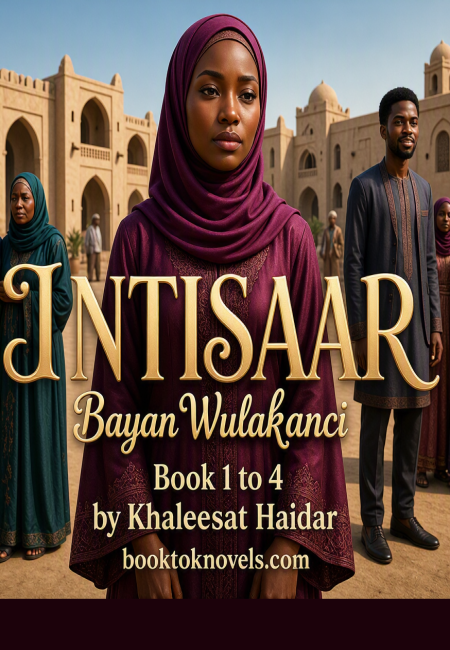
INTISAAR
Hook
Intisaar has grown up in a house where she is loved by a few, tolerated by some, and openly despised by others. Raised by a mother whose past is filled with unanswered questions, Intisaar learns early that belonging to a family does not always mean being accepted by it. Between cruel words, humiliation, family rivalry, and a childhood shaped by the absence of her biological father, she survives by keeping her head down and her heart guarded.
But life begins to change when Dr. Faruuq enters her world.
What starts with awkward encounters, reluctant conversations, and a phone number given without her permission slowly develops into something Intisaar never expected. Faruuq sees beyond the walls surrounding her. Yet just when she begins to believe that perhaps she can finally experience happiness, the secrets surrounding her family, her mother's past, and the people connected to her threaten to complicate everything.
INTISAAR is not simply a love story. It is a story about a young woman searching for dignity, identity, family, and a place where her heart can finally feel safe.
Summary
Intisaar lives with her mother and younger sister, Ihsaan, in a complicated household dominated by family tension and resentment. Although she has learned to endure the insults directed at her and her mother, the constant hostility from members of the extended family leaves deep wounds that she rarely allows anyone to see. She responds to humiliation with silence, patience, and an occasional smile, but beneath that calm exterior is a young woman carrying years of unanswered questions and emotional pain.
Her difficult upbringing becomes clearer when she eventually reveals the truth about her mother's past. Her mother, once abandoned and separated from her own family, was found in desperate circumstances and brought into the care of Inna, a woman whose compassion eventually changes both their lives. Intisaar grows up believing that Inna is her grandmother, only to discover the complicated circumstances surrounding her birth and the disappearance of her biological father. Her mother's eventual marriage to Alhaji Abubakar brings them into a new household, but instead of giving them the peaceful family they hoped for, it places them among people who never fully accept their presence.
Inside this household, Intisaar faces hostility from several family members. She is insulted, mistreated, and repeatedly reminded that she does not belong. Even when conflicts become severe enough to divide the family, she continues trying to avoid confrontation. Her relationship with Inna, however, provides an important source of protection and affection. Haisam, her stepbrother, also treats her with genuine care, regarding her as a younger sister rather than someone who should be excluded from the family.
Then Dr. Faruuq appears. Their first encounters are far from romantic. Intisaar is uncomfortable with his attention and repeatedly tries to keep her distance. Faruuq, however, remains persistent without forcing her to accept him. His kindness, patience, humor, and growing interest gradually break through her defenses. Their conversations become more frequent, and Intisaar slowly finds herself looking forward to hearing from him. What she initially considers an unwanted distraction begins to develop into a genuine emotional connection.
Faruuq eventually asks Intisaar to tell him about her life, and the request opens a door to the painful history she has spent years carrying. As she recounts her childhood, her mother's abandonment, her father's absence, the hostility within the household, and the complicated relationships that shaped her upbringing, Faruuq begins to understand that the quiet girl he has fallen for carries far more than what he sees on the surface. Yet even as their relationship moves toward something more serious, the question of whether Intisaar's family will accept their relationship remains unresolved. Her past has already complicated her present, and the future may demand choices neither of them is prepared to make.
Genre and Setting
INTISAAR is a Hausa family drama and romance built around emotional conflict, domestic tension, hidden family history, and the gradual development of love. Its romantic storyline is intertwined with a much larger exploration of family relationships, belonging, social pressure, resentment, loyalty, and the emotional consequences of childhood experiences.
The story is primarily set within a large family compound in Kano, where several households exist under the same extended family structure. The compound becomes more than simply a physical setting. It represents the complicated relationships that bind the characters together while simultaneously keeping their conflicts alive. School, the hospital, neighborhood streets, shops, and family gatherings expand the world beyond the compound, while conversations between relatives repeatedly bring the story back to the emotional center of Intisaar's life.
The cultural environment is strongly rooted in Hausa Muslim family life. Prayer, schooling, marriage expectations, respect for elders, extended-family responsibilities, and traditional ideas about family hierarchy all influence the characters' decisions.
Core Themes
At its heart, INTISAAR explores the difference between being surrounded by people and actually feeling accepted. Intisaar lives among relatives, yet she frequently experiences the loneliness of someone treated as an outsider. Her experiences demonstrate how repeated insults and rejection can shape a person's confidence without necessarily destroying their ability to remain kind.
Family is another major theme. The novel presents family as both a source of protection and a source of pain. Inna becomes an important maternal figure through her compassion and determination to protect those she considers hers, while other family members use their position within the household to create fear and division. The story asks an important question: what truly makes someone family, blood or the way they choose to treat another person?
The novel also explores identity and the consequences of hidden truths. Intisaar's understanding of herself changes when she discovers more about her mother's past and the circumstances surrounding her own upbringing. Her relationship with Faruuq further forces her to confront parts of herself that she has kept hidden.
Love and emotional trust form another central theme. Faruuq's relationship with Intisaar does not develop instantly. It grows through conversations, patience, curiosity, and his willingness to understand her past. His interest introduces a new possibility into a life that has largely been defined by endurance.
Above all, INTISAAR examines resilience. Intisaar repeatedly experiences situations that could make her bitter, yet she continues to show affection toward the people she loves and maintains her composure even when others attempt to humiliate her.
Key Characters
Intisaar is the emotional center of the story. She is quiet, patient, sensitive, and remarkably resilient. Her tendency to avoid confrontation is not a sign that she is weak. Instead, it reflects years of learning how to survive in an environment where speaking too much can create even more problems. Her journey is largely about discovering that she deserves love, respect, and a life beyond the limitations others have placed around her.
Dr. Faruuq enters Intisaar's life as an unexpected complication and gradually becomes someone much more important. He is confident, humorous, observant, and genuinely interested in understanding her. His attraction to Intisaar develops into something deeper as he discovers the painful history behind her reserved personality. His willingness to listen becomes one of the most significant aspects of their relationship.
Momy, Intisaar's mother, is a woman whose life has been shaped by abandonment, uncertainty, patience, and sacrifice. Her past explains much of the emotional atmosphere surrounding Intisaar. Despite her own suffering, she remains protective of her children and chooses endurance over unnecessary confrontation.
Inna is one of the strongest maternal figures in the story. Her relationship with Intisaar and her mother demonstrates that love can be created through compassion rather than biology alone. She becomes a source of protection, wisdom, and emotional security for Intisaar.
Haisam treats Intisaar with genuine affection and sees her as a sister. His presence provides one of the few examples of healthy family affection within a household otherwise dominated by rivalry and hostility.
Kursum, Khadija, Fadila, Rahma, and the other members of the extended household contribute significantly to the conflict surrounding Intisaar. Their attitudes toward her expose the jealousy, prejudice, resentment, and competition that exist beneath the surface of the family.
Analytics and Insight
The strongest narrative element in INTISAAR is its contrast between quiet suffering and emotional transformation. Intisaar does not begin the story as someone searching for romance. She is primarily concerned with surviving her environment, protecting her dignity, helping her mother, and maintaining peace. This makes Faruuq's arrival particularly significant because he introduces a different kind of attention into her life.
The novel also uses domestic conflict to create suspense. The reader is constantly left wondering how long Intisaar can endure the hostility surrounding her, whether her family history will eventually become fully exposed, and whether the people who have mistreated her will face consequences. Every family confrontation carries the possibility of changing the balance within the household.
Faruuq's presence creates a second layer of suspense. His relationship with Intisaar is developing while significant questions remain unanswered. Her family's complicated structure, the absence of her biological father, and the existence of other relationships within the household all suggest that love alone may not be enough to guarantee a peaceful future.
The story therefore works on two emotional levels. On one level, it is the story of a young woman gradually falling in love. On another, it is the story of a girl who has spent much of her life trying to understand where she truly belongs. The romance becomes more meaningful because it arrives after years of emotional deprivation.
A Deeper Look at Intisaar's Journey
Intisaar's greatest struggle is not simply finding love. It is learning to believe that she deserves it.
For much of her life, she has been conditioned to apologize even when she has done nothing wrong. She accepts insults because resistance often brings greater punishment. She gives up things that belong to her to avoid conflict. She hides her tears, protects her mother from unnecessary worry, and continues performing the responsibilities expected of her even after being humiliated.
Faruuq gradually notices the person beneath that silence.
His interest gives Intisaar something she has rarely experienced: the feeling of being deliberately chosen. Yet that attention also frightens her because accepting love means becoming vulnerable. For someone who has spent years protecting herself from rejection, vulnerability is dangerous.
That is what makes their developing relationship compelling. Intisaar is not merely deciding whether she likes Faruuq. She is deciding whether she can trust happiness when it finally appears.
Why Readers Will Want to Read It
INTISAAR combines romance with the emotional intensity of a complicated family drama. Readers who enjoy stories involving family rivalry, hidden histories, difficult childhoods, forbidden or complicated relationships, emotional healing, and slow-building romance will find plenty to keep them invested.
The story does not present love as an escape from every problem. Instead, love becomes another challenge for Intisaar because it forces her to confront her fears and consider a future different from the life she has always known.
With four books bringing the story together, readers can expect an extended emotional journey filled with family secrets, confrontations, misunderstandings, affection, jealousy, resilience, and the question of whether Intisaar can finally move beyond the circumstances that have defined her life.
An Insightful Quote
Final Perspective
INTISAAR: Complete Book 1 to 4 is ultimately a story about a young woman standing at the intersection of family, identity, pain, and love. Intisaar's world is filled with people who constantly remind her of what they believe she is, yet her journey gradually becomes about discovering who she actually is.
Her relationship with Faruuq adds romance to the story, but the deeper attraction lies in the emotional journey surrounding it. The unanswered questions about her origins, the complicated history of her mother, the divisions within the household, and the hostility she continues to endure create a narrative where happiness never comes without uncertainty.
And just when Intisaar begins to believe that perhaps she has finally found someone who sees her for who she truly is, the unresolved pieces of her past remain waiting in the background.
For readers who enjoy Hausa novels filled with romance, family drama, emotional conflict, secrets, suspense, and characters whose relationships evolve through difficult circumstances, INTISAAR offers a long-form story designed to keep them turning the pages to discover what happens next.