Author: Khadijah Salisu Fari Also associated with: Mammy Kabeer (Anty Mammy) Genre: Hausa Fiction, Mystery, Supernatural Thriller, Drama, Suspense
The Hook
What if the creature everyone fears is the only being willing to protect you?
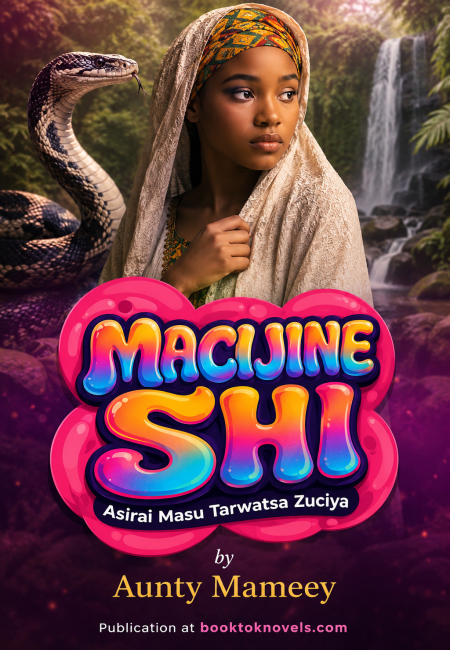
Fattu is a young Fulani girl growing up in a world where kindness is scarce and accusations can be more dangerous than the truth. She is abused, neglected, hungry, frightened and desperate to find the mother she has never known. Then, at the river, she encounters something that should terrify her more than anything else.
A giant snake.
But this is no ordinary snake.
Instead of attacking Fattu, the mysterious creature repeatedly appears whenever danger comes near her. It fights those who try to harm her, follows her into places she considers safe, sheds tears like a human being and even seems to understand her suffering.
Soon, Fattu begins asking the question that may change her entire life:
Who, or what, is the mysterious snake that keeps saving her?
And more importantly, why does it seem to have a connection with her?
A Five-Paragraph Summary
Fattu is introduced as a beautiful young Fulani girl whose outward appearance hides a deeply painful life. She spends her days caring for cattle and trying to survive under the authority of her cruel grandmother, Hansai. Instead of receiving affection and protection, Fattu is frequently insulted, beaten and treated as though she is a burden. Her only real source of comfort is her uncle, Baffa Bukar, a kind-hearted man who quietly tries to protect her despite having little power within the household.
Fattu's already difficult life takes a frightening turn when she goes to fetch water from a river and encounters an enormous snake. She runs for her life, convinced that the creature intends to kill her. Yet the encounter becomes the beginning of a strange mystery. The snake continues appearing around her, but its behaviour does not match that of an ordinary dangerous animal. On several occasions, it seems to intervene when Fattu is threatened, leaving her confused about whether she should fear it or trust it.
As the story develops, the snake becomes increasingly mysterious. Fattu notices unusual features in its eyes and body, including characteristics that seem strangely human. She also witnesses transformations that make her question whether the creature is actually a snake at all. When she recites Qur'anic verses near it, its behaviour changes dramatically, deepening the mystery surrounding its identity. Fattu begins to suspect that there is a hidden supernatural explanation behind its presence in her life.
Meanwhile, Fattu's human enemies continue creating danger around her. Jauro and Haroji attempt to take advantage of her vulnerability, while the village ruler, the Lamido, becomes involved after Jauro is found dead. Instead of investigating the truth fairly, the villagers begin accusing Fattu of using supernatural powers to summon the snake. The situation becomes even more dangerous because the Lamido already has his own interest in Fattu and appears willing to use his authority against her.
By the time Fattu is taken into the Lamido's custody, she is trapped between several forms of danger. Her grandmother wants her gone, the villagers believe she is responsible for the mysterious deaths, and the Lamido's intentions toward her are deeply troubling. Yet somewhere beyond the village, the mysterious snake continues searching for her. As the mystery deepens, Fattu must discover the truth about the creature, her unknown mother, the strange connection between them and the hidden forces surrounding her life before the accusations against her become impossible to escape.
What Is MACIJINE SHI About?
MACIJINE SHI is a mystery-driven Hausa novel built around the life of a vulnerable young girl whose world becomes entangled with a supernatural mystery.
At the heart of the story is Fattu, a girl who has very little control over the circumstances surrounding her. She does not understand why she has been separated from her mother, why she receives so little affection from the people around her, or why a mysterious creature seems determined to protect her.
The novel gradually moves from ordinary village hardship into supernatural suspense. What initially appears to be a simple story about a girl encountering a snake becomes something much larger. The snake appears to possess unusual intelligence, strange physical characteristics and an unexplained emotional connection to Fattu.
The central mystery is therefore not simply whether the snake is dangerous.
The real question is what the snake actually is and why it has chosen Fattu.
Genre and Story Style
MACIJINE SHI combines several storytelling elements.
The novel is primarily a supernatural mystery and suspense story, but it also contains strong elements of village drama, psychological tension, family conflict, social injustice and survival.
The supernatural component revolves around the mysterious snake and its unexplained connection with Fattu. The mystery is deliberately revealed gradually, allowing readers to form their own theories before the truth becomes clearer.
The drama comes from Fattu's difficult family life, especially her relationship with Hansai and her dependence on Baffa Bukar.
The suspense comes from the constant uncertainty surrounding the snake, the accusations against Fattu and the increasingly dangerous people surrounding her.
The story also contains serious social themes because Fattu is repeatedly placed in situations where vulnerable people can easily be exploited by those with greater physical or social power.
The Setting
The story is strongly rooted in a Fulani rural environment.
The opening scenes take readers into the countryside, where Fattu tends cattle, moves through grassland and communicates with the animals in Fulfulde. The environment is not merely background scenery. It contributes significantly to the atmosphere of the novel.
The river, the bush, the cattle settlement, the huts and the changing weather all become important parts of the story.
Rain clouds and darkness repeatedly create an atmosphere of uncertainty. The river becomes particularly significant because it is where Fattu's encounters with the mysterious snake begin to develop.
The rural setting also allows the novel to explore traditional community structures, village authority, family relationships and the power held by figures such as the Lamido.
Core Themes
Abuse and Survival
One of the strongest themes in the story is survival in an environment where Fattu is repeatedly mistreated.
She is not presented as someone living an easy life. She is expected to work, obey and endure hardship despite her young age. Her suffering establishes an important emotional foundation for the story.
The Search for Protection
Fattu's relationship with Baffa Bukar reveals her deep need for protection and affection.
He is one of the few people who genuinely cares about her. His kindness becomes particularly important because it contrasts sharply with the cruelty she experiences elsewhere.
The mysterious snake later introduces another form of protection, creating one of the novel's most intriguing questions.
Why would a terrifying creature protect someone who has almost nobody else?
Mystery and Hidden Identity
Fattu knows very little about her mother. This absence becomes another mystery running beneath the supernatural plot.
At the same time, she cannot understand the identity of the snake.
These two mysteries may eventually intersect.
Good Versus Evil
The novel repeatedly contrasts people who appear respectable with people who behave cruelly.
Some characters hold authority but abuse it. Others have very little power but show genuine compassion.
This creates an important question throughout the story: Does being powerful make someone good, or does true character reveal itself through how a person treats the vulnerable?
Fear and Courage
Fattu is afraid of the snake, and understandably so. Yet her repeated encounters with it gradually force her to confront her fear.
Her journey is therefore not simply about escaping danger. It is also about developing the courage to investigate something she does not understand.
Injustice and False Accusations
Fattu becomes a target of suspicion after the death of Jauro.
Rather than discovering the truth, the villagers quickly turn against her.
This part of the story highlights how dangerous collective fear can become when people decide that someone is guilty before understanding what actually happened.
Key Characters
Fattu
Fattu is the central character of the story.
She is young, beautiful, hardworking and deeply vulnerable. Despite everything happening around her, she retains a strong emotional connection to her faith and continues trying to find a way through her circumstances.
Her greatest unanswered question concerns her mother. She does not even know what her mother looks like, yet the desire to meet her remains deeply important to her.
Fattu's character becomes especially interesting because she is frightened by the supernatural creature but eventually begins to feel concern for it as well.
That change transforms their relationship from simple fear into mystery and emotional attachment.
Baffa Bukar
Baffa Bukar is one of the most compassionate figures in Fattu's life.
He quietly feeds her, comforts her, helps her when she is injured and tries to defend her when the village turns against her.
His character represents the protective family relationship Fattu desperately needs.
However, his ability to protect her is limited by the authority of the household and the wider village system.
Hansai
Hansai, Fattu's grandmother, is one of the major human sources of conflict.
She treats Fattu with hostility and repeatedly blames her for problems. Her behaviour contributes heavily to Fattu's suffering and makes the girl's home feel more like a place of fear than safety.
Hansai's attitude also influences the villagers' perception of Fattu.
The Mysterious Snake
The snake is arguably the most fascinating presence in the entire novel.
At first, it appears to be a terrifying predator. Yet its actions gradually contradict that assumption.
It protects Fattu.
It attacks people who attempt to harm her.
It appears to understand her.
It sheds tears.
Its eyes appear strangely human.
It reacts unusually to Qur'anic recitation.
And it seems to possess an unexplained connection with Fattu.
The creature therefore becomes more than a source of fear. It becomes the central mystery of the novel.
Jauro
Jauro represents another form of danger in Fattu's world.
His behaviour toward her demonstrates how vulnerable she is to people who attempt to exploit her situation. His encounter with the mysterious snake becomes one of the major turning points in the story.
Haroji
Haroji is associated with Jauro and witnesses the supernatural confrontation near the river.
His survival allows information about the mysterious snake to spread throughout the village, eventually contributing to the accusations against Fattu.
The Lamido
The Lamido represents authority and power within the village.
However, his position does not automatically make him a fair judge. His personal interest in Fattu creates another layer of danger once she is brought before him.
His involvement turns the mystery into a much larger conflict involving power, reputation and justice.
The Mystery Behind the Snake
This is the question that keeps the story moving.
The creature does not behave like an ordinary snake.
Its eyes appear human.
It seems capable of emotional expression.
It cries.
It protects Fattu.
It reacts strangely to Qur'anic recitation.
It appears to understand when she is frightened.
It returns to search for her when she is taken away.
And, most importantly, it seems to appear whenever Fattu is in serious danger.
These details encourage readers to question everything they think they know about the creature.
Is it really a snake?
Could it be a supernatural being?
Is someone controlling it?
Was it sent to protect Fattu?
Or does its connection to her go back much further than she realizes?
Analytics and Story Insight
From a storytelling perspective, MACIJINE SHI is structured around a strong central mystery. The title itself immediately creates curiosity because it presents the snake as something whose true identity is uncertain.
The strongest narrative device is the contrast between appearance and reality.
The snake looks dangerous but repeatedly protects Fattu.
Some human characters appear to be members of her family or respected members of society, yet they become sources of suffering.
Fattu is accused of being dangerous even though she is repeatedly shown as a victim of circumstances beyond her control.
This reversal keeps the reader questioning who the real threat is.
Another effective element is the gradual escalation of danger. The story begins with Fattu's difficult domestic life, moves into the terrifying encounter at the river, then expands into supernatural mystery, attempted exploitation, death, village accusations and political authority.
As the danger grows, the mystery surrounding the snake grows with it.
The novel also uses unanswered questions effectively. Instead of explaining everything immediately, the story repeatedly leaves the reader with questions about Fattu's mother, the snake's identity, its connection with Fattu and the reasons behind its strange behaviour.
This creates a strong page-turning quality.
What Makes the Novel Intriguing?
The most unusual feature of MACIJINE SHI is that the creature responsible for the title may not be the true villain.
Readers are introduced to the snake through fear. Fattu sees it as something capable of killing her. But as the story progresses, the reader begins to notice a strange pattern.
Whenever Fattu is threatened, the snake appears.
This changes the entire meaning of the story.
The reader is eventually forced to ask whether the frightening creature is actually Fattu's greatest protector.
That uncertainty is what gives the novel its strongest suspense.
A Thematic Quote
"Sometimes the creature that frightens you most is the only one standing between you and the people who truly mean you harm."
This quote captures one of the central ideas of the novel without revealing the mystery surrounding the snake.
Why Readers May Enjoy MACIJINE SHI
Readers who enjoy Hausa novels involving mystery, supernatural encounters, village life, suspense, family conflict and hidden identities will find several elements to explore here.
The story combines emotional hardship with supernatural questions, giving readers both a character-driven storyline and a mystery they can continue trying to solve.
Fattu's situation also creates an emotional reason to keep reading. Readers are not simply waiting to discover what the snake is. They also want to know whether Fattu will finally escape the people who continually hurt her and whether she will ever discover the truth about her mother.
Most importantly, the novel constantly challenges the reader's assumptions.
The creature looks frightening.
The villagers believe Fattu is dangerous.
The authorities believe they know the truth.
But none of these conclusions may be what they appear to be.
Final Verdict
MACIJINE SHI is a suspenseful Hausa supernatural mystery centered on a young girl whose painful life becomes connected to an unexplained creature.
Fattu's journey takes her from cattle herding and family hardship into a frightening world of mysterious encounters, false accusations, village politics and supernatural protection.
The biggest attraction is the unanswered question surrounding the snake.
Who is it?
Why does it protect Fattu?
What does it want from her?
And what secret connects the creature to the girl it refuses to abandon?
Those questions form the heart of MACIJINE SHI, making the novel a story of fear, survival, mystery and the discovery that appearances can be dangerously misleading.
SEO Keywords
Macijine Shi Hausa Novel, Macijine Shi by Khadijah Salisu Fari, Hausa Novels, Hausa Novel Download, Hausa Mystery Novel, Hausa Suspense Novel, Hausa Supernatural Novel, Hausa Fiction, Hausa Romantic and Suspense Novels, Fulani Hausa Novel, Hausa Village Story, Hausa Thriller, Hausa Drama Novel, Hausa New Novels, Hausa Online Novels, Hausa Free Books, Hausa Literature, Hausa Story, Hausa Novel Reading, Hausa Mystery Stories, Hausa Supernatural Stories, Hausa Fiction Books, Macijine Shi Complete Novel, Khadijah Salisu Fari Novels








![<? $row['name']; ?>](https://booktoknovels.com/Public/thumb/225x325/ebook/2026/01/thumb-920512585989.webp)
![<? $row['name']; ?>](https://booktoknovels.com/Public/thumb/225x325/ebook/2026/01/thumb-523353161230.webp)
![<? $row['name']; ?>](https://booktoknovels.com/Public/thumb/225x325/ebook/2026/01/thumb-108728368255.webp)
![<? $row['name']; ?>](https://booktoknovels.com/Public/thumb/225x325/ebook/2026/01/thumb-949891906361.webp)
![<? $row['name']; ?>](https://booktoknovels.com/Public/thumb/225x325/ebook/2026/01/thumb-596280087818.webp)
![<? $row['name']; ?>](https://booktoknovels.com/Public/thumb/225x325/ebook/2026/01/thumb-173293332745.webp)
![<? $row['name']; ?>](https://booktoknovels.com/Public/thumb/225x325/ebook/2026/01/thumb-880926466422.webp)
![<? $row['name']; ?>](https://booktoknovels.com/Public/thumb/225x325/ebook/2026/01/thumb-893168548926.webp)
![<? $row['name']; ?>](https://booktoknovels.com/Public/thumb/225x325/ebook/2026/01/thumb-936868186146.webp)
![<? $row['name']; ?>](https://booktoknovels.com/Public/thumb/225x325/ebook/2026/01/thumb-734427937651.webp)
![<? $row['name']; ?>](https://booktoknovels.com/Public/thumb/225x325/ebook/2026/01/thumb-885497082027.webp)
![<? $row['name']; ?>](https://booktoknovels.com/Public/thumb/225x325/ebook/2026/01/thumb-898860904759.webp)
MACIJINE SHI
Author: Khadijah Salisu Fari
Also associated with: Mammy Kabeer (Anty Mammy)
Genre: Hausa Fiction, Mystery, Supernatural Thriller, Drama, Suspense
The Hook
What if the creature everyone fears is the only being willing to protect you?
Fattu is a young Fulani girl growing up in a world where kindness is scarce and accusations can be more dangerous than the truth. She is abused, neglected, hungry, frightened and desperate to find the mother she has never known. Then, at the river, she encounters something that should terrify her more than anything else.
A giant snake.
But this is no ordinary snake.
Instead of attacking Fattu, the mysterious creature repeatedly appears whenever danger comes near her. It fights those who try to harm her, follows her into places she considers safe, sheds tears like a human being and even seems to understand her suffering.
Soon, Fattu begins asking the question that may change her entire life:
Who, or what, is the mysterious snake that keeps saving her?
And more importantly, why does it seem to have a connection with her?
A Five-Paragraph Summary
Fattu is introduced as a beautiful young Fulani girl whose outward appearance hides a deeply painful life. She spends her days caring for cattle and trying to survive under the authority of her cruel grandmother, Hansai. Instead of receiving affection and protection, Fattu is frequently insulted, beaten and treated as though she is a burden. Her only real source of comfort is her uncle, Baffa Bukar, a kind-hearted man who quietly tries to protect her despite having little power within the household.
Fattu's already difficult life takes a frightening turn when she goes to fetch water from a river and encounters an enormous snake. She runs for her life, convinced that the creature intends to kill her. Yet the encounter becomes the beginning of a strange mystery. The snake continues appearing around her, but its behaviour does not match that of an ordinary dangerous animal. On several occasions, it seems to intervene when Fattu is threatened, leaving her confused about whether she should fear it or trust it.
As the story develops, the snake becomes increasingly mysterious. Fattu notices unusual features in its eyes and body, including characteristics that seem strangely human. She also witnesses transformations that make her question whether the creature is actually a snake at all. When she recites Qur'anic verses near it, its behaviour changes dramatically, deepening the mystery surrounding its identity. Fattu begins to suspect that there is a hidden supernatural explanation behind its presence in her life.
Meanwhile, Fattu's human enemies continue creating danger around her. Jauro and Haroji attempt to take advantage of her vulnerability, while the village ruler, the Lamido, becomes involved after Jauro is found dead. Instead of investigating the truth fairly, the villagers begin accusing Fattu of using supernatural powers to summon the snake. The situation becomes even more dangerous because the Lamido already has his own interest in Fattu and appears willing to use his authority against her.
By the time Fattu is taken into the Lamido's custody, she is trapped between several forms of danger. Her grandmother wants her gone, the villagers believe she is responsible for the mysterious deaths, and the Lamido's intentions toward her are deeply troubling. Yet somewhere beyond the village, the mysterious snake continues searching for her. As the mystery deepens, Fattu must discover the truth about the creature, her unknown mother, the strange connection between them and the hidden forces surrounding her life before the accusations against her become impossible to escape.
What Is MACIJINE SHI About?
MACIJINE SHI is a mystery-driven Hausa novel built around the life of a vulnerable young girl whose world becomes entangled with a supernatural mystery.
At the heart of the story is Fattu, a girl who has very little control over the circumstances surrounding her. She does not understand why she has been separated from her mother, why she receives so little affection from the people around her, or why a mysterious creature seems determined to protect her.
The novel gradually moves from ordinary village hardship into supernatural suspense. What initially appears to be a simple story about a girl encountering a snake becomes something much larger. The snake appears to possess unusual intelligence, strange physical characteristics and an unexplained emotional connection to Fattu.
The central mystery is therefore not simply whether the snake is dangerous.
The real question is what the snake actually is and why it has chosen Fattu.
Genre and Story Style
MACIJINE SHI combines several storytelling elements.
The novel is primarily a supernatural mystery and suspense story, but it also contains strong elements of village drama, psychological tension, family conflict, social injustice and survival.
The supernatural component revolves around the mysterious snake and its unexplained connection with Fattu. The mystery is deliberately revealed gradually, allowing readers to form their own theories before the truth becomes clearer.
The drama comes from Fattu's difficult family life, especially her relationship with Hansai and her dependence on Baffa Bukar.
The suspense comes from the constant uncertainty surrounding the snake, the accusations against Fattu and the increasingly dangerous people surrounding her.
The story also contains serious social themes because Fattu is repeatedly placed in situations where vulnerable people can easily be exploited by those with greater physical or social power.
The Setting
The story is strongly rooted in a Fulani rural environment.
The opening scenes take readers into the countryside, where Fattu tends cattle, moves through grassland and communicates with the animals in Fulfulde. The environment is not merely background scenery. It contributes significantly to the atmosphere of the novel.
The river, the bush, the cattle settlement, the huts and the changing weather all become important parts of the story.
Rain clouds and darkness repeatedly create an atmosphere of uncertainty. The river becomes particularly significant because it is where Fattu's encounters with the mysterious snake begin to develop.
The rural setting also allows the novel to explore traditional community structures, village authority, family relationships and the power held by figures such as the Lamido.
Core Themes
Abuse and Survival
One of the strongest themes in the story is survival in an environment where Fattu is repeatedly mistreated.
She is not presented as someone living an easy life. She is expected to work, obey and endure hardship despite her young age. Her suffering establishes an important emotional foundation for the story.
The Search for Protection
Fattu's relationship with Baffa Bukar reveals her deep need for protection and affection.
He is one of the few people who genuinely cares about her. His kindness becomes particularly important because it contrasts sharply with the cruelty she experiences elsewhere.
The mysterious snake later introduces another form of protection, creating one of the novel's most intriguing questions.
Why would a terrifying creature protect someone who has almost nobody else?
Mystery and Hidden Identity
Fattu knows very little about her mother. This absence becomes another mystery running beneath the supernatural plot.
At the same time, she cannot understand the identity of the snake.
These two mysteries may eventually intersect.
Good Versus Evil
The novel repeatedly contrasts people who appear respectable with people who behave cruelly.
Some characters hold authority but abuse it. Others have very little power but show genuine compassion.
This creates an important question throughout the story: Does being powerful make someone good, or does true character reveal itself through how a person treats the vulnerable?
Fear and Courage
Fattu is afraid of the snake, and understandably so. Yet her repeated encounters with it gradually force her to confront her fear.
Her journey is therefore not simply about escaping danger. It is also about developing the courage to investigate something she does not understand.
Injustice and False Accusations
Fattu becomes a target of suspicion after the death of Jauro.
Rather than discovering the truth, the villagers quickly turn against her.
This part of the story highlights how dangerous collective fear can become when people decide that someone is guilty before understanding what actually happened.
Key Characters
Fattu
Fattu is the central character of the story.
She is young, beautiful, hardworking and deeply vulnerable. Despite everything happening around her, she retains a strong emotional connection to her faith and continues trying to find a way through her circumstances.
Her greatest unanswered question concerns her mother. She does not even know what her mother looks like, yet the desire to meet her remains deeply important to her.
Fattu's character becomes especially interesting because she is frightened by the supernatural creature but eventually begins to feel concern for it as well.
That change transforms their relationship from simple fear into mystery and emotional attachment.
Baffa Bukar
Baffa Bukar is one of the most compassionate figures in Fattu's life.
He quietly feeds her, comforts her, helps her when she is injured and tries to defend her when the village turns against her.
His character represents the protective family relationship Fattu desperately needs.
However, his ability to protect her is limited by the authority of the household and the wider village system.
Hansai
Hansai, Fattu's grandmother, is one of the major human sources of conflict.
She treats Fattu with hostility and repeatedly blames her for problems. Her behaviour contributes heavily to Fattu's suffering and makes the girl's home feel more like a place of fear than safety.
Hansai's attitude also influences the villagers' perception of Fattu.
The Mysterious Snake
The snake is arguably the most fascinating presence in the entire novel.
At first, it appears to be a terrifying predator. Yet its actions gradually contradict that assumption.
It protects Fattu.
It attacks people who attempt to harm her.
It appears to understand her.
It sheds tears.
Its eyes appear strangely human.
It reacts unusually to Qur'anic recitation.
And it seems to possess an unexplained connection with Fattu.
The creature therefore becomes more than a source of fear. It becomes the central mystery of the novel.
Jauro
Jauro represents another form of danger in Fattu's world.
His behaviour toward her demonstrates how vulnerable she is to people who attempt to exploit her situation. His encounter with the mysterious snake becomes one of the major turning points in the story.
Haroji
Haroji is associated with Jauro and witnesses the supernatural confrontation near the river.
His survival allows information about the mysterious snake to spread throughout the village, eventually contributing to the accusations against Fattu.
The Lamido
The Lamido represents authority and power within the village.
However, his position does not automatically make him a fair judge. His personal interest in Fattu creates another layer of danger once she is brought before him.
His involvement turns the mystery into a much larger conflict involving power, reputation and justice.
The Mystery Behind the Snake
This is the question that keeps the story moving.
The creature does not behave like an ordinary snake.
Its eyes appear human.
It seems capable of emotional expression.
It cries.
It protects Fattu.
It reacts strangely to Qur'anic recitation.
It appears to understand when she is frightened.
It returns to search for her when she is taken away.
And, most importantly, it seems to appear whenever Fattu is in serious danger.
These details encourage readers to question everything they think they know about the creature.
Is it really a snake?
Could it be a supernatural being?
Is someone controlling it?
Was it sent to protect Fattu?
Or does its connection to her go back much further than she realizes?
Analytics and Story Insight
From a storytelling perspective, MACIJINE SHI is structured around a strong central mystery. The title itself immediately creates curiosity because it presents the snake as something whose true identity is uncertain.
The strongest narrative device is the contrast between appearance and reality.
The snake looks dangerous but repeatedly protects Fattu.
Some human characters appear to be members of her family or respected members of society, yet they become sources of suffering.
Fattu is accused of being dangerous even though she is repeatedly shown as a victim of circumstances beyond her control.
This reversal keeps the reader questioning who the real threat is.
Another effective element is the gradual escalation of danger. The story begins with Fattu's difficult domestic life, moves into the terrifying encounter at the river, then expands into supernatural mystery, attempted exploitation, death, village accusations and political authority.
As the danger grows, the mystery surrounding the snake grows with it.
The novel also uses unanswered questions effectively. Instead of explaining everything immediately, the story repeatedly leaves the reader with questions about Fattu's mother, the snake's identity, its connection with Fattu and the reasons behind its strange behaviour.
This creates a strong page-turning quality.
What Makes the Novel Intriguing?
The most unusual feature of MACIJINE SHI is that the creature responsible for the title may not be the true villain.
Readers are introduced to the snake through fear. Fattu sees it as something capable of killing her. But as the story progresses, the reader begins to notice a strange pattern.
Whenever Fattu is threatened, the snake appears.
This changes the entire meaning of the story.
The reader is eventually forced to ask whether the frightening creature is actually Fattu's greatest protector.
That uncertainty is what gives the novel its strongest suspense.
A Thematic Quote
This quote captures one of the central ideas of the novel without revealing the mystery surrounding the snake.
Why Readers May Enjoy MACIJINE SHI
Readers who enjoy Hausa novels involving mystery, supernatural encounters, village life, suspense, family conflict and hidden identities will find several elements to explore here.
The story combines emotional hardship with supernatural questions, giving readers both a character-driven storyline and a mystery they can continue trying to solve.
Fattu's situation also creates an emotional reason to keep reading. Readers are not simply waiting to discover what the snake is. They also want to know whether Fattu will finally escape the people who continually hurt her and whether she will ever discover the truth about her mother.
Most importantly, the novel constantly challenges the reader's assumptions.
The creature looks frightening.
The villagers believe Fattu is dangerous.
The authorities believe they know the truth.
But none of these conclusions may be what they appear to be.
Final Verdict
MACIJINE SHI is a suspenseful Hausa supernatural mystery centered on a young girl whose painful life becomes connected to an unexplained creature.
Fattu's journey takes her from cattle herding and family hardship into a frightening world of mysterious encounters, false accusations, village politics and supernatural protection.
The biggest attraction is the unanswered question surrounding the snake.
Who is it?
Why does it protect Fattu?
What does it want from her?
And what secret connects the creature to the girl it refuses to abandon?
Those questions form the heart of MACIJINE SHI, making the novel a story of fear, survival, mystery and the discovery that appearances can be dangerously misleading.
SEO Keywords
Macijine Shi Hausa Novel, Macijine Shi by Khadijah Salisu Fari, Hausa Novels, Hausa Novel Download, Hausa Mystery Novel, Hausa Suspense Novel, Hausa Supernatural Novel, Hausa Fiction, Hausa Romantic and Suspense Novels, Fulani Hausa Novel, Hausa Village Story, Hausa Thriller, Hausa Drama Novel, Hausa New Novels, Hausa Online Novels, Hausa Free Books, Hausa Literature, Hausa Story, Hausa Novel Reading, Hausa Mystery Stories, Hausa Supernatural Stories, Hausa Fiction Books, Macijine Shi Complete Novel, Khadijah Salisu Fari Novels