MIJIN BUZUWA is a compelling Hausa domestic drama that explores the destructive power of jealousy, the complications of polygamous relationships, and the painful consequences of allowing pride to take control of a family. Set against the backdrop of contemporary Northern Nigerian life, the story follows a household once built on love, trust, and family bonds as it struggles under the weight of rivalry, manipulation, and emotional suffering. At its heart lies a difficult question: what happens when a woman who believes she must fight to protect her marriage begins destroying the very peace she hopes to preserve? Through the lives of two wives, a stubborn husband, and a young woman unexpectedly drawn into their conflict, the novel reveals how personal choices can affect not only a marriage but also the innocent children and relatives caught in the middle.
The story opens on a stormy night in Kaduna, where heavy rain, thunder, and lightning accompany the return of Nafisa, a wealthy-looking Tuareg woman whose arrival immediately unsettles the household. Her luxurious appearance and commanding attitude reflect the confidence of someone accustomed to having things go her way. Yet beneath the glamour lies a deeply possessive nature, one that refuses to tolerate the presence of another woman in her husband's life. When she learns that Fatima, her husband's first wife, has returned to the family home, Nafisa's anger becomes impossible to conceal. Rather than welcoming her husband's former partner with dignity or accepting the complicated reality of their shared family, she treats Fatima as an unwelcome rival whose very existence threatens her position. Even when her husband, Samad, insists that he did not know Fatima had returned, Nafisa remains suspicious, convinced that someone is keeping secrets from her. Her jealousy is not simply a passing emotion. It has become the lens through which she interprets nearly everything around her.
Fatima's circumstances reveal the quieter tragedy unfolding behind the family's outward appearance of comfort. She and Samad once shared a genuine love that grew naturally from their childhood connection and the close relationship between their families. Their marriage was founded on familiarity, affection, and years of mutual understanding, and they had two children together. For a time, Fatima believed she had found a stable and loving home. Everything changed when Samad's life took a new direction after securing employment in Kano, where he met Nafisa, a woman who had come to Nigeria with her family in search of better opportunities. What began as an ordinary acquaintance gradually developed into a relationship that transformed Samad's priorities and disrupted his first marriage. Fatima and Samad eventually separated, not necessarily because their affection had disappeared, but because the arrival of another woman brought complications that their relationship could no longer withstand. Now, despite living in the same family environment, Fatima finds herself increasingly marginalized, struggling to protect her children's happiness while enduring the humiliation of being treated like an outsider in a home where she once belonged.
Nafisa's influence extends beyond her rivalry with Fatima. Her conduct begins to affect the entire household, including the children, domestic workers, and Samad's relatives. The once-comfortable family atmosphere becomes increasingly restrictive as Nafisa attempts to control everyday activities and establish herself as the unquestioned authority. One of the most revealing incidents occurs when Fatima discovers that the kitchen has been locked, preventing her from preparing breakfast for her children before school. What might appear to be a small domestic disagreement exposes the deeper cruelty of the situation. Fatima is left scrambling for a solution while her children are forced to depend on their grandparents for food. The children notice the changes around them, and their conversations reveal the emotional strain they are experiencing. Affan, in particular, struggles to understand why his father is no longer as accessible as he once was and why his mother's unhappiness seems to bring amusement to Nafisa. His innocent observations expose the damage that adult conflicts inflict on children who have neither the power nor the understanding to resolve them.
As the tension grows, Fatima's suffering becomes a source of concern for members of Samad's extended family, especially his mother, Hajiya Kubura. The older woman recognizes that the household is losing its peace and that Fatima's patience is being mistaken for weakness. Yet Samad's relatives face a difficult challenge because their attempts to understand or correct the situation are complicated by his own choices and Nafisa's growing influence. The family begins to question how a man who once lived comfortably with his first wife and children could allow his household to become a place of resentment and emotional hardship. Nafisa's apparent prosperity and assertive personality make the situation even more complicated. She presents herself as a woman who knows what she wants, but her determination to dominate the household raises questions about the difference between confidence and cruelty. The more she attempts to secure her position through control, the more unstable the family becomes.
A new development emerges through Yusuf, Samad's close friend, who believes that his friend's behavior must change if the family is ever to regain its peace. Yusuf understands that Samad has become emotionally distant, proud, and difficult to approach. He also recognizes that Fatima and her children are paying the price for a conflict they did not create. Rather than confronting Samad with accusations alone, Yusuf begins considering a different approach, one that might force his friend to reconsider his attitude and rediscover the qualities he has lost. His plan leads him to Khadija, a young woman whose intelligence, honesty, education, and willingness to stand up for herself make her an unusual choice for such a delicate undertaking. Khadija has already demonstrated that she is not easily intimidated by Samad's wealth, appearance, or intimidating personality. Where others may hesitate to challenge him, she is prepared to speak her mind, even when her words provoke his anger.
Khadija's involvement introduces a new layer of suspense into the story. Yusuf asks her to help him bring about a change in Samad's character, hoping that her presence and influence will encourage his friend to become more considerate and repair his damaged family relationships. He believes that Khadija can reach a part of Samad that other people have been unable to reach. However, the request places her in an uncomfortable position. She is not interested in wasting her time on a man she considers arrogant and disrespectful, and she has no desire to become entangled in the complications of another person's marriage. Her own dignity and personal principles matter to her, and she is unwilling to sacrifice them simply because Yusuf believes she can make a difference. Nevertheless, her sympathy for Hajiya Kubura, Fatima, and the children eventually persuades her to consider the proposal. She agrees to try, but she makes it clear that she will not tolerate any attempt to undermine her self-respect.
The early encounters between Khadija and Samad are filled with sharp exchanges, humor, and mutual irritation. Samad cannot understand why a young woman he considers inexperienced refuses to be impressed by him. His wealth, status, and physical appearance have little effect on her, and her willingness to challenge him exposes the insecurity hidden beneath his commanding exterior. Khadija, on the other hand, sees his arrogance as a serious obstacle to the change Yusuf hopes to achieve. Their conversations frequently become verbal battles, with each refusing to surrender easily. Yusuf attempts to turn their confrontations into opportunities for reconciliation, encouraging them to communicate and gradually develop an understanding. Yet his efforts do not immediately produce the results he desires. Khadija remains skeptical of Samad's intentions, while Samad struggles to accept the possibility that someone he initially dismisses might have something important to teach him.
The situation becomes even more intriguing when Yusuf encourages Khadija to spend time with Samad and help him rebuild the relationships he has neglected. What begins as an unusual arrangement soon becomes a test of patience, emotional intelligence, and personal boundaries. Khadija must learn how to deal with a man whose temper and pride make honest communication difficult, while Samad is confronted with someone who refuses to flatter him or excuse his behavior. Their developing connection creates an atmosphere of uncertainty. Is Khadija capable of helping Samad recognize his mistakes, or will his stubbornness turn the arrangement into another source of conflict? Can a person who has become accustomed to getting his way learn to respect others when faced with someone who refuses to be controlled? These questions give the narrative an engaging sense of anticipation, particularly as Khadija begins to realize that the task she accepted may be more complicated than she initially imagined.
Beyond the central conflict, MIJIN BUZUWA examines the role of extended family relationships in shaping marriage and domestic life. Samad's marriage to Fatima was supported by a long history of friendship and kinship between their families, making their separation especially painful. The arrival of Nafisa does not simply create a disagreement between two women. It unsettles a network of relationships that had developed over generations. Hajiya Kubura's concern illustrates how the actions of a married couple can affect parents, grandparents, siblings, and children. At the same time, the story highlights the limitations of family intervention when the person at the center of the problem refuses to acknowledge the consequences of his choices. Relatives may recognize injustice and offer advice, but lasting change requires the willingness of those involved to confront their own behavior.
Jealousy is another central theme, presented through Nafisa's determination to protect her position at almost any cost. Her fear of losing her husband's attention appears to influence her treatment of Fatima and her approach to household authority. The novel invites readers to consider how insecurity can become destructive when it is expressed through humiliation, manipulation, and attempts to control others. Nafisa's behavior also raises questions about the nature of marital security. If a woman feels compelled to restrict another person's access to food, family support, or even ordinary domestic comforts to maintain her own position, has she truly achieved the peace she desires? Her actions suggest that domination may offer temporary satisfaction while creating deeper resentment that eventually threatens the entire household.
The story also explores pride, class, and the misuse of social status. Samad possesses the material comfort and confidence that many people admire, yet these advantages do not necessarily make him a better husband, father, or friend. His dismissive attitude toward people he considers beneath him reveals a gap between outward success and genuine maturity. Khadija's refusal to be intimidated challenges this assumption and demonstrates that character cannot be measured by wealth, appearance, or influence. Her education and moral confidence provide her with a different kind of strength, one rooted in independent judgment rather than material possessions. Through their interactions, the narrative suggests that true respect must be earned through conduct and consideration for others, not demanded through status or authority.
Fatima's character brings the themes of patience, motherhood, and emotional resilience into sharper focus. She is a woman whose quiet disposition makes her reluctant to engage in unnecessary confrontation, even when she has legitimate reasons to defend herself. Her patience allows her to endure circumstances that might provoke others into open conflict, but it also leaves her vulnerable to people who interpret restraint as an invitation to take advantage of her. Her children become the clearest reminder of what is at stake. They need stability, affection, and a dependable relationship with both parents, yet they are increasingly exposed to tension they cannot fully understand. Fatima's struggle is therefore not only about her place in Samad's life. It is also about preserving her children's emotional well-being in an environment where their needs are too easily overshadowed by adult rivalries.
Khadija offers a contrasting perspective on womanhood and personal strength. Unlike Fatima, who tends to avoid confrontation, Khadija is outspoken and prepared to challenge disrespect directly. Yet her willingness to speak boldly does not mean she lacks compassion. Her decision to help Yusuf is motivated partly by concern for a family suffering under the consequences of Samad's choices. She must balance that compassion with the need to protect her own dignity, particularly as she becomes more involved with a man whose behavior she initially finds intolerable. Her character introduces an important question about the boundaries of helping others. How much should someone be willing to sacrifice for the sake of another family's peace, and when must personal principles take priority over the expectations of friends and relatives?
From an analytical perspective, MIJIN BUZUWA draws much of its dramatic strength from the contrast between outward appearances and private realities. The luxurious vehicles, fashionable clothing, and comfortable surroundings associated with Samad and Nafisa conceal a household marked by insecurity, resentment, and emotional neglect. Fatima's situation reveals that financial comfort cannot guarantee happiness, while Khadija's interactions with Samad suggest that a person's real character often becomes visible when someone refuses to be impressed by superficial advantages. The domestic setting also gives ordinary events, such as preparing breakfast, returning home, or speaking to a child, greater significance. These seemingly minor incidents reveal the power dynamics operating within the family and show how repeated acts of exclusion can gradually transform a home into a place of distress.
The narrative's use of multiple relationships creates several possibilities for further conflict. Nafisa's jealousy may intensify if she senses that Samad is changing or that his attention is being drawn away from her control. Fatima's continued presence raises questions about whether Samad will ever acknowledge the value of the family life he abandoned. Meanwhile, Khadija's involvement creates uncertainty about whether Yusuf's plan can succeed without exposing her to emotional complications of her own. Samad's character development is particularly important because any meaningful restoration of the family depends on his willingness to accept responsibility. Neither Khadija's intelligence nor Yusuf's friendship can produce lasting change if Samad remains unwilling to examine his own actions. His transformation, if it comes, must involve more than temporary politeness. It must include accountability, respect, and a genuine recognition of the people he has hurt.
The novel also draws attention to the danger of allowing children to become silent witnesses to marital conflict. Affan's questions about his father reveal that children notice far more than adults may realize. They observe differences in treatment, recognize when affection has disappeared, and interpret the behavior of the people around them in ways that can shape their emotional development. His desire to avoid his father's return because he associates it with his mother's tears and the other household members' laughter is particularly revealing. It suggests that the conflict has already altered his understanding of family relationships. Through such moments, the story encourages readers to look beyond the arguments between adults and consider the long-term consequences of an unstable home environment.
For readers who enjoy Hausa domestic fiction, MIJIN BUZUWA offers a mixture of family drama, marital rivalry, emotional tension, social commentary, and the possibility of personal transformation. Its characters are placed in situations that invite strong reactions, from sympathy for Fatima and her children to frustration with Samad's arrogance and concern over Nafisa's possessiveness. Khadija's sharp tongue and refusal to be intimidated introduce moments of humor into an otherwise tense narrative, creating a contrast between the seriousness of the family's problems and the lively exchanges through which some of those problems unfold. The result is a story that balances emotional conflict with interpersonal drama while examining the difficult relationship between love, respect, jealousy, and responsibility.
Ultimately, the most compelling question in MIJIN BUZUWA is whether a family damaged by pride and rivalry can recover its peace when the people responsible for its suffering are finally challenged to change. Fatima has endured the consequences of a broken relationship, Nafisa appears determined to protect her position, and Samad must confront the impact of his own behavior. Khadija enters their world with a willingness to help, but she is not a miracle worker, and the outcome depends on choices that no one can make on Samad's behalf. Her presence may become the catalyst for change, yet it may also expose deeper tensions that have remained hidden beneath the family's troubled relationships. As the story progresses, readers are left to consider whether patience can survive repeated humiliation, whether jealousy can ever be satisfied through control, and whether a proud man can learn the difference between being obeyed and being respected.
“A home can have wealth, beauty, and everything the world admires, yet lose its peace when jealousy becomes stronger than love and pride becomes greater than understanding.”
MIJIN BUZUWA is more than a story about a husband and the women in his life. It is an exploration of the emotional cost of rivalry, the vulnerability of children caught in family disputes, and the courage required to challenge destructive behavior without losing one's sense of self. Through Fatima's quiet endurance, Nafisa's possessiveness, Samad's struggle with pride, Yusuf's determination to help his friend, and Khadija's bold intervention, the novel presents a household at a crossroads. Every character has something to gain, something to lose, and a personal truth that may ultimately determine the family's future. For readers drawn to suspenseful Hausa family stories with complex relationships and meaningful social themes, this narrative offers a compelling reason to keep turning the pages and discover whether understanding will finally triumph over jealousy, or whether the damage caused by pride will prove too deep to repair.


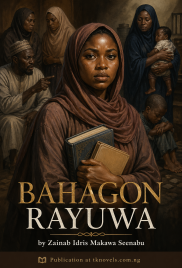





Mijin Buzuwa Girman Kai da Kishi
By ZAINAB IDRIS MAKAWA
Novel Pitch:
MIJIN BUZUWA is a compelling Hausa domestic drama that explores the destructive power of jealousy, the complications of polygamous relationships, and the painful consequences of allowing pride to take control of a family. Set against the backdrop of contemporary Northern Nigerian life, the story follows a household once built on love, trust, and family bonds as it struggles under the weight of rivalry, manipulation, and emotional suffering. At its heart lies a difficult question: what happens when a woman who believes she must fight to protect her marriage begins destroying the very peace she hopes to preserve? Through the lives of two wives, a stubborn husband, and a young woman unexpectedly drawn into their conflict, the novel reveals how personal choices can affect not only a marriage but also the innocent children and relatives caught in the middle.
The story opens on a stormy night in Kaduna, where heavy rain, thunder, and lightning accompany the return of Nafisa, a wealthy-looking Tuareg woman whose arrival immediately unsettles the household. Her luxurious appearance and commanding attitude reflect the confidence of someone accustomed to having things go her way. Yet beneath the glamour lies a deeply possessive nature, one that refuses to tolerate the presence of another woman in her husband's life. When she learns that Fatima, her husband's first wife, has returned to the family home, Nafisa's anger becomes impossible to conceal. Rather than welcoming her husband's former partner with dignity or accepting the complicated reality of their shared family, she treats Fatima as an unwelcome rival whose very existence threatens her position. Even when her husband, Samad, insists that he did not know Fatima had returned, Nafisa remains suspicious, convinced that someone is keeping secrets from her. Her jealousy is not simply a passing emotion. It has become the lens through which she interprets nearly everything around her.
Fatima's circumstances reveal the quieter tragedy unfolding behind the family's outward appearance of comfort. She and Samad once shared a genuine love that grew naturally from their childhood connection and the close relationship between their families. Their marriage was founded on familiarity, affection, and years of mutual understanding, and they had two children together. For a time, Fatima believed she had found a stable and loving home. Everything changed when Samad's life took a new direction after securing employment in Kano, where he met Nafisa, a woman who had come to Nigeria with her family in search of better opportunities. What began as an ordinary acquaintance gradually developed into a relationship that transformed Samad's priorities and disrupted his first marriage. Fatima and Samad eventually separated, not necessarily because their affection had disappeared, but because the arrival of another woman brought complications that their relationship could no longer withstand. Now, despite living in the same family environment, Fatima finds herself increasingly marginalized, struggling to protect her children's happiness while enduring the humiliation of being treated like an outsider in a home where she once belonged.
Nafisa's influence extends beyond her rivalry with Fatima. Her conduct begins to affect the entire household, including the children, domestic workers, and Samad's relatives. The once-comfortable family atmosphere becomes increasingly restrictive as Nafisa attempts to control everyday activities and establish herself as the unquestioned authority. One of the most revealing incidents occurs when Fatima discovers that the kitchen has been locked, preventing her from preparing breakfast for her children before school. What might appear to be a small domestic disagreement exposes the deeper cruelty of the situation. Fatima is left scrambling for a solution while her children are forced to depend on their grandparents for food. The children notice the changes around them, and their conversations reveal the emotional strain they are experiencing. Affan, in particular, struggles to understand why his father is no longer as accessible as he once was and why his mother's unhappiness seems to bring amusement to Nafisa. His innocent observations expose the damage that adult conflicts inflict on children who have neither the power nor the understanding to resolve them.
As the tension grows, Fatima's suffering becomes a source of concern for members of Samad's extended family, especially his mother, Hajiya Kubura. The older woman recognizes that the household is losing its peace and that Fatima's patience is being mistaken for weakness. Yet Samad's relatives face a difficult challenge because their attempts to understand or correct the situation are complicated by his own choices and Nafisa's growing influence. The family begins to question how a man who once lived comfortably with his first wife and children could allow his household to become a place of resentment and emotional hardship. Nafisa's apparent prosperity and assertive personality make the situation even more complicated. She presents herself as a woman who knows what she wants, but her determination to dominate the household raises questions about the difference between confidence and cruelty. The more she attempts to secure her position through control, the more unstable the family becomes.
A new development emerges through Yusuf, Samad's close friend, who believes that his friend's behavior must change if the family is ever to regain its peace. Yusuf understands that Samad has become emotionally distant, proud, and difficult to approach. He also recognizes that Fatima and her children are paying the price for a conflict they did not create. Rather than confronting Samad with accusations alone, Yusuf begins considering a different approach, one that might force his friend to reconsider his attitude and rediscover the qualities he has lost. His plan leads him to Khadija, a young woman whose intelligence, honesty, education, and willingness to stand up for herself make her an unusual choice for such a delicate undertaking. Khadija has already demonstrated that she is not easily intimidated by Samad's wealth, appearance, or intimidating personality. Where others may hesitate to challenge him, she is prepared to speak her mind, even when her words provoke his anger.
Khadija's involvement introduces a new layer of suspense into the story. Yusuf asks her to help him bring about a change in Samad's character, hoping that her presence and influence will encourage his friend to become more considerate and repair his damaged family relationships. He believes that Khadija can reach a part of Samad that other people have been unable to reach. However, the request places her in an uncomfortable position. She is not interested in wasting her time on a man she considers arrogant and disrespectful, and she has no desire to become entangled in the complications of another person's marriage. Her own dignity and personal principles matter to her, and she is unwilling to sacrifice them simply because Yusuf believes she can make a difference. Nevertheless, her sympathy for Hajiya Kubura, Fatima, and the children eventually persuades her to consider the proposal. She agrees to try, but she makes it clear that she will not tolerate any attempt to undermine her self-respect.
The early encounters between Khadija and Samad are filled with sharp exchanges, humor, and mutual irritation. Samad cannot understand why a young woman he considers inexperienced refuses to be impressed by him. His wealth, status, and physical appearance have little effect on her, and her willingness to challenge him exposes the insecurity hidden beneath his commanding exterior. Khadija, on the other hand, sees his arrogance as a serious obstacle to the change Yusuf hopes to achieve. Their conversations frequently become verbal battles, with each refusing to surrender easily. Yusuf attempts to turn their confrontations into opportunities for reconciliation, encouraging them to communicate and gradually develop an understanding. Yet his efforts do not immediately produce the results he desires. Khadija remains skeptical of Samad's intentions, while Samad struggles to accept the possibility that someone he initially dismisses might have something important to teach him.
The situation becomes even more intriguing when Yusuf encourages Khadija to spend time with Samad and help him rebuild the relationships he has neglected. What begins as an unusual arrangement soon becomes a test of patience, emotional intelligence, and personal boundaries. Khadija must learn how to deal with a man whose temper and pride make honest communication difficult, while Samad is confronted with someone who refuses to flatter him or excuse his behavior. Their developing connection creates an atmosphere of uncertainty. Is Khadija capable of helping Samad recognize his mistakes, or will his stubbornness turn the arrangement into another source of conflict? Can a person who has become accustomed to getting his way learn to respect others when faced with someone who refuses to be controlled? These questions give the narrative an engaging sense of anticipation, particularly as Khadija begins to realize that the task she accepted may be more complicated than she initially imagined.
Beyond the central conflict, MIJIN BUZUWA examines the role of extended family relationships in shaping marriage and domestic life. Samad's marriage to Fatima was supported by a long history of friendship and kinship between their families, making their separation especially painful. The arrival of Nafisa does not simply create a disagreement between two women. It unsettles a network of relationships that had developed over generations. Hajiya Kubura's concern illustrates how the actions of a married couple can affect parents, grandparents, siblings, and children. At the same time, the story highlights the limitations of family intervention when the person at the center of the problem refuses to acknowledge the consequences of his choices. Relatives may recognize injustice and offer advice, but lasting change requires the willingness of those involved to confront their own behavior.
Jealousy is another central theme, presented through Nafisa's determination to protect her position at almost any cost. Her fear of losing her husband's attention appears to influence her treatment of Fatima and her approach to household authority. The novel invites readers to consider how insecurity can become destructive when it is expressed through humiliation, manipulation, and attempts to control others. Nafisa's behavior also raises questions about the nature of marital security. If a woman feels compelled to restrict another person's access to food, family support, or even ordinary domestic comforts to maintain her own position, has she truly achieved the peace she desires? Her actions suggest that domination may offer temporary satisfaction while creating deeper resentment that eventually threatens the entire household.
The story also explores pride, class, and the misuse of social status. Samad possesses the material comfort and confidence that many people admire, yet these advantages do not necessarily make him a better husband, father, or friend. His dismissive attitude toward people he considers beneath him reveals a gap between outward success and genuine maturity. Khadija's refusal to be intimidated challenges this assumption and demonstrates that character cannot be measured by wealth, appearance, or influence. Her education and moral confidence provide her with a different kind of strength, one rooted in independent judgment rather than material possessions. Through their interactions, the narrative suggests that true respect must be earned through conduct and consideration for others, not demanded through status or authority.
Fatima's character brings the themes of patience, motherhood, and emotional resilience into sharper focus. She is a woman whose quiet disposition makes her reluctant to engage in unnecessary confrontation, even when she has legitimate reasons to defend herself. Her patience allows her to endure circumstances that might provoke others into open conflict, but it also leaves her vulnerable to people who interpret restraint as an invitation to take advantage of her. Her children become the clearest reminder of what is at stake. They need stability, affection, and a dependable relationship with both parents, yet they are increasingly exposed to tension they cannot fully understand. Fatima's struggle is therefore not only about her place in Samad's life. It is also about preserving her children's emotional well-being in an environment where their needs are too easily overshadowed by adult rivalries.
Khadija offers a contrasting perspective on womanhood and personal strength. Unlike Fatima, who tends to avoid confrontation, Khadija is outspoken and prepared to challenge disrespect directly. Yet her willingness to speak boldly does not mean she lacks compassion. Her decision to help Yusuf is motivated partly by concern for a family suffering under the consequences of Samad's choices. She must balance that compassion with the need to protect her own dignity, particularly as she becomes more involved with a man whose behavior she initially finds intolerable. Her character introduces an important question about the boundaries of helping others. How much should someone be willing to sacrifice for the sake of another family's peace, and when must personal principles take priority over the expectations of friends and relatives?
From an analytical perspective, MIJIN BUZUWA draws much of its dramatic strength from the contrast between outward appearances and private realities. The luxurious vehicles, fashionable clothing, and comfortable surroundings associated with Samad and Nafisa conceal a household marked by insecurity, resentment, and emotional neglect. Fatima's situation reveals that financial comfort cannot guarantee happiness, while Khadija's interactions with Samad suggest that a person's real character often becomes visible when someone refuses to be impressed by superficial advantages. The domestic setting also gives ordinary events, such as preparing breakfast, returning home, or speaking to a child, greater significance. These seemingly minor incidents reveal the power dynamics operating within the family and show how repeated acts of exclusion can gradually transform a home into a place of distress.
The narrative's use of multiple relationships creates several possibilities for further conflict. Nafisa's jealousy may intensify if she senses that Samad is changing or that his attention is being drawn away from her control. Fatima's continued presence raises questions about whether Samad will ever acknowledge the value of the family life he abandoned. Meanwhile, Khadija's involvement creates uncertainty about whether Yusuf's plan can succeed without exposing her to emotional complications of her own. Samad's character development is particularly important because any meaningful restoration of the family depends on his willingness to accept responsibility. Neither Khadija's intelligence nor Yusuf's friendship can produce lasting change if Samad remains unwilling to examine his own actions. His transformation, if it comes, must involve more than temporary politeness. It must include accountability, respect, and a genuine recognition of the people he has hurt.
The novel also draws attention to the danger of allowing children to become silent witnesses to marital conflict. Affan's questions about his father reveal that children notice far more than adults may realize. They observe differences in treatment, recognize when affection has disappeared, and interpret the behavior of the people around them in ways that can shape their emotional development. His desire to avoid his father's return because he associates it with his mother's tears and the other household members' laughter is particularly revealing. It suggests that the conflict has already altered his understanding of family relationships. Through such moments, the story encourages readers to look beyond the arguments between adults and consider the long-term consequences of an unstable home environment.
For readers who enjoy Hausa domestic fiction, MIJIN BUZUWA offers a mixture of family drama, marital rivalry, emotional tension, social commentary, and the possibility of personal transformation. Its characters are placed in situations that invite strong reactions, from sympathy for Fatima and her children to frustration with Samad's arrogance and concern over Nafisa's possessiveness. Khadija's sharp tongue and refusal to be intimidated introduce moments of humor into an otherwise tense narrative, creating a contrast between the seriousness of the family's problems and the lively exchanges through which some of those problems unfold. The result is a story that balances emotional conflict with interpersonal drama while examining the difficult relationship between love, respect, jealousy, and responsibility.
Ultimately, the most compelling question in MIJIN BUZUWA is whether a family damaged by pride and rivalry can recover its peace when the people responsible for its suffering are finally challenged to change. Fatima has endured the consequences of a broken relationship, Nafisa appears determined to protect her position, and Samad must confront the impact of his own behavior. Khadija enters their world with a willingness to help, but she is not a miracle worker, and the outcome depends on choices that no one can make on Samad's behalf. Her presence may become the catalyst for change, yet it may also expose deeper tensions that have remained hidden beneath the family's troubled relationships. As the story progresses, readers are left to consider whether patience can survive repeated humiliation, whether jealousy can ever be satisfied through control, and whether a proud man can learn the difference between being obeyed and being respected.
“A home can have wealth, beauty, and everything the world admires, yet lose its peace when jealousy becomes stronger than love and pride becomes greater than understanding.”
MIJIN BUZUWA is more than a story about a husband and the women in his life. It is an exploration of the emotional cost of rivalry, the vulnerability of children caught in family disputes, and the courage required to challenge destructive behavior without losing one's sense of self. Through Fatima's quiet endurance, Nafisa's possessiveness, Samad's struggle with pride, Yusuf's determination to help his friend, and Khadija's bold intervention, the novel presents a household at a crossroads. Every character has something to gain, something to lose, and a personal truth that may ultimately determine the family's future. For readers drawn to suspenseful Hausa family stories with complex relationships and meaningful social themes, this narrative offers a compelling reason to keep turning the pages and discover whether understanding will finally triumph over jealousy, or whether the damage caused by pride will prove too deep to repair.