At only twenty-three, Noor Iman has already lived through more heartbreak than many people experience in a lifetime. She has been married three times, divorced twice, and widowed once. Yet none of those experiences has been allowed to define the dreams she still carries inside her. While the people around her judge her by failed marriages and cruel rumors, Noor Iman is desperately trying to hold on to the one thing she believes can still save her future: education.
But Noor's life is far from ordinary.
Everywhere she goes, whispers follow her. In her neighborhood, people have already decided who she is without knowing what she has endured. At home, the woman she calls her mother barely acknowledges her existence, while another woman, her stepmother, gives her the affection she desperately craves. Her father loves her deeply, yet even his love becomes complicated by the pressure of family, tradition, and the painful belief that something must be wrong with a girl who cannot seem to keep a marriage.
Then Noor enters university and encounters Dr. Abdulraheem, a lecturer whose presence immediately disrupts her already fragile peace. Their first meeting is anything but pleasant. His harshness leaves her humiliated in front of other students, while his striking appearance makes it difficult for her to completely ignore him.
And just when Noor begins to believe that perhaps her life can finally move in a different direction, another man enters her world with a completely different kind of promise.
His name is Hamza.
He knows about her past. He has heard what people say about her. Yet he tells her that he still wants her.
For the first time in a long time, Noor begins to wonder whether happiness might still be possible.
Then, on the very day her marriage to Hamza is completed, tragedy strikes.
Summary
Noor Iman is a young woman carrying wounds that cannot be seen simply by looking at her. She is beautiful, intelligent, modest, and deeply interested in education, but her life has been overshadowed by circumstances she never asked for. At eighteen, just after completing her secondary education, she is married to Bello, a man she had known and loved for years. What should have been the beginning of her adult life instead becomes her first devastating encounter with rejection. On the night she is taken to her husband's home, Bello divorces her without giving her a reason she can understand. She returns home confused, heartbroken, and humiliated, only to face another form of punishment from the very people she expects to protect her.
The rumors become worse when people begin accusing Noor of things she insists she never did. Her failed marriage is turned into public entertainment, with neighbors and relatives attaching shameful explanations to a situation they know nothing about. Even her father, despite loving her, begins to look at the failed marriage through the lens of suspicion and societal expectations. Noor's mother remains emotionally distant, making the situation even more painful. The person who consistently gives Noor the maternal affection she longs for is Hadiza, whom she calls Mama, despite being her father's other wife. That bond becomes one of the few sources of warmth in a household where Noor often feels unwanted.
Determined not to allow her circumstances to destroy her future, Noor returns to education. She gains admission to Bayero University Kano to study for a B.Sc. in Education Biology. University becomes a fragile escape from the judgment surrounding her. There, she meets Zarah Ahmad Malabo, a lively and outspoken student who refuses to let Noor remain isolated. Their friendship slowly brings laughter and companionship back into Noor's life. Zarah also helps her catch up academically after Noor struggles with attendance, especially because of her difficult encounters with Dr. Abdulraheem, a lecturer who repeatedly sends her out of his class for arriving late.
Yet education cannot completely shield Noor from marriage and tragedy. After her first failed marriage, she marries Ahmad, believing that perhaps this time her life will finally settle. Instead, she is subjected to humiliation and physical abuse before the marriage ends after only six months. The experience leaves another deep wound and reinforces the cruel reputation that has already been created around her. When Hamza later approaches her and openly declares his love, Noor is hesitant. She warns him that she is already a twice-married divorcee. Hamza, however, tells her that her past does not change what he feels for her. For once, someone appears willing to judge her by the woman she actually is rather than by the stories told about her.
Their marriage is arranged with the knowledge of both families, and Noor begins to hope that she has finally found the person who will stand beside her. But fate has something else in store. On the very day her marriage to Hamza is solemnized, tragedy takes him away. Noor becomes a widow almost immediately after becoming a wife. The loss devastates her, and the whispers surrounding her become even darker. Some people begin suggesting that there must be something supernatural behind the repeated deaths and failed marriages surrounding her life. Instead of allowing those accusations to consume her completely, Noor struggles silently with grief, confusion, and a weakening connection to the religious practices that once gave her comfort.
Meanwhile, another story is developing around Dr. Abdulraheem and his family. Behind his stern personality and intimidating presence is a complicated family life of his own. His younger sister Zarah, whom Noor has come to know at university, reveals a completely different side of the lecturer's world. Abdulraheem is respected and feared by his students, yet at home he faces his own frustrations, particularly concerning family responsibilities and the difficult situation involving Hamna. Elsewhere, Hammad, another member of this wider circle, finds himself under increasing pressure from his parents to marry despite his desire to wait until he finds the woman he truly believes is meant for him.
As these lives begin to move closer together, Noor's story becomes more than a tale of failed marriages. It becomes a story about reputation, family, faith, education, grief, friendship, and the question of whether a person can escape a destiny that everyone else has already written for them.
Genre and Setting
Noor Iman is a contemporary Hausa romance and family drama built around emotional conflict, marriage, social expectations, personal tragedy, friendship, and the struggle for self-discovery. The story combines romantic elements with domestic drama and an exploration of the pressures faced by a young woman whose life is constantly being judged by the people around her.
The story moves through familiar Northern Nigerian environments, particularly Kano and the university setting surrounding Bayero University Kano. Classrooms, lecture halls, family homes, neighborhood streets, mosques, cafeterias, and ordinary community spaces all become important parts of Noor's journey. The setting gives the novel a strong cultural identity while allowing the characters to confront issues that remain deeply human and relatable.
Core Themes
The Weight of Society's Judgment
One of the strongest themes in Noor Iman's story is the destructive power of public judgment. Noor is repeatedly condemned for circumstances that are not fully understood by the people judging her. Her marriages become gossip, her divorce becomes evidence against her character, and her widowhood becomes another reason for people to speculate. The novel explores how easily a person's entire identity can be reduced to rumors.
Marriage and Its Consequences
Marriage is not presented simply as a romantic destination. For Noor, it becomes a source of love, rejection, humiliation, abuse, hope, and devastating loss. Her experiences force the story to examine what happens when marriage is influenced by family expectations, societal pressure, assumptions, and incomplete understanding.
Education as Hope
Noor's determination to continue her education gives her character another dimension beyond romance. She wants to become a successful lecturer, and her university life represents the future she still hopes to build for herself. Education becomes a place where she can imagine an identity that is not defined by her marital history.
Motherhood and Emotional Belonging
Noor's relationship with her mother and Mama provides some of the most emotionally significant moments in the story. She desperately wants the affection of a biological mother who remains distant, while receiving genuine care from another woman within the same family. This complicated relationship raises powerful questions about whether motherhood is defined by biology alone or by the love and protection a person actually receives.
Faith, Destiny, and Suffering
Noor repeatedly wrestles with the idea of destiny. She has suffered losses she cannot explain and begins to question why so many painful events seem to happen to her. Her struggle with prayer, Quranic reading, and spiritual consistency adds another layer to her emotional journey as she searches for meaning in circumstances beyond her control.
Key Characters
Noor Iman
Noor is the emotional center of the novel. She is a twenty-three-year-old university student studying Education Biology at Bayero University Kano. Beneath her quiet and sometimes withdrawn personality is a woman who once possessed a lively, talkative nature before years of emotional suffering changed her. She longs for education, independence, affection, and a peaceful future, but her past repeatedly follows her wherever she goes.
Dr. Abdulraheem Ahmad Malabo
Dr. Abdulraheem is introduced as a strict, intimidating lecturer whose first interactions with Noor are anything but gentle. He is disciplined, educated, confident, and extremely conscious of order in his classroom. Yet the glimpse into his family life reveals that the stern lecturer has personal struggles and responsibilities of his own. His connection to Zarah also places him much closer to Noor's world than she initially realizes.
Zarah Ahmad Malabo
Zarah becomes one of the brightest sources of friendship in Noor's otherwise painful life. Talkative, energetic, confident, and friendly, she refuses to allow Noor to remain isolated. She helps her academically and gradually becomes someone with whom Noor can laugh and share ordinary moments. Her friendship gives Noor a temporary escape from the heavy thoughts that dominate her life.
Hamza Noor
Hamza enters Noor's life at a point when she has almost stopped believing that anyone could genuinely love her. He knows about her past but chooses not to define her by it. His willingness to marry her gives Noor a brief glimpse of the happiness she has been denied. His sudden death, immediately after their wedding, becomes one of the most devastating turning points in her story.
Mama Hadiza
Hadiza is Noor's emotional refuge. Although she is her father's other wife and never has children of her own, she treats Noor with the tenderness and attention that Noor desperately wants from her biological mother. Her relationship with Noor demonstrates how love can develop in unexpected places.
Noor's Father
Noor's father genuinely loves his daughter, but his relationship with her is complicated by cultural expectations and the influence of relatives. He wants what he believes is best for her, yet some of his decisions and assumptions contribute to Noor's suffering. His character reflects the tension between parental love and the pressures of family and society.
Hammad
Hammad represents another perspective on marriage. At thirty-five, he faces increasing pressure from his parents to settle down, yet he refuses to marry simply because society says he should. He wants to find someone he genuinely believes is right for him. His storyline introduces another dimension to the novel's exploration of marriage and personal choice.
Analytics and Insight
At its heart, Noor Iman is a story about a woman attempting to reclaim control over a life that seems to be constantly decided by other people. Her marriages are arranged or influenced by family circumstances, her reputation is shaped by neighborhood gossip, and even her grief becomes something other people feel entitled to interpret.
What makes Noor's journey particularly compelling is that she is not presented as someone without dreams. She wants to study. She wants to become a lecturer. She wants companionship. She wants to be loved by her mother. She wants to be understood. Her tragedy is not simply that she experiences heartbreak. It is that she repeatedly has to defend her right to exist beyond the labels people place on her.
The university setting also creates an important contrast. At home and in her neighborhood, Noor is primarily known through her history. At university, she has the opportunity to become a student, a friend, and eventually someone whose future might be determined by her own efforts. Yet even there, her past continues to follow her.
The novel also creates suspense by introducing characters whose lives appear separate from Noor's at first. Dr. Abdulraheem, Zarah, Hammad, Hamna, and their families gradually reveal a larger network of relationships, secrets, pressures, and personal conflicts. This gives the story room to expand beyond Noor's immediate suffering and creates anticipation about how these different lives may eventually intersect.
Why Readers Will Be Drawn Into Noor Iman's Story
Readers who enjoy emotionally intense Hausa romance, family drama, university stories, marriage conflicts, and characters facing difficult social realities will find plenty to explore in Noor Iman. The novel does not depend solely on romance to create tension. Its strongest pull comes from the uncertainty surrounding Noor's future.
After three marriages, can she ever find genuine peace?
Can education become the escape she has been searching for?
Can she survive a society that has already decided what kind of woman she is?
And with new people entering her life, will the future finally give her something other than another painful goodbye?
These questions give Noor Iman's journey its emotional momentum and make each new chapter feel like another step toward an answer.
A Quote From the Story
“I am not what people say I am. I am simply a woman trying to survive the life Allah has written for her.”
That sentiment captures the heart of Noor's journey: a young woman surrounded by judgment, carrying wounds that nobody fully understands, yet still searching for a reason to believe that her story has not reached its darkest chapter.
Final Perspective
Noor Iman is ultimately a story of survival beneath the surface of romance. It follows a young woman whose beauty attracts attention, whose marriages attract gossip, and whose suffering attracts judgment, but whose greatest battle is the struggle to remember that she is more than everything that has happened to her.
Her journey moves between love and loss, family and rejection, friendship and isolation, faith and doubt, ambition and societal pressure. Every marriage leaves another scar. Every rumor adds another weight to her heart. Every new relationship carries the possibility of either healing or another devastating wound.
And perhaps the most important question is not whether Noor will find love again.
It is whether, after everything she has endured, she will finally find herself.

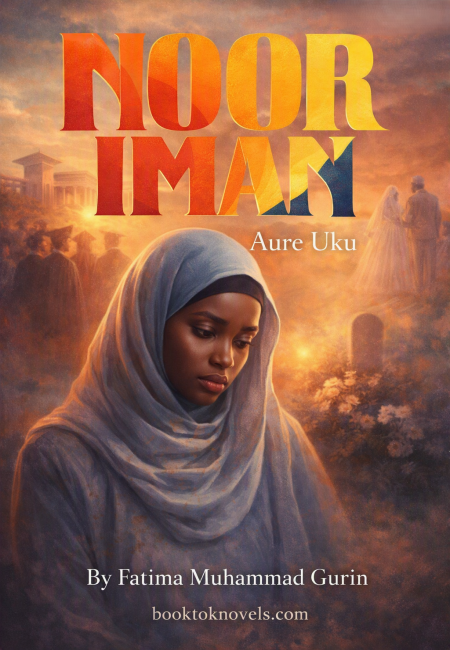









NOOR IMAN
By Fatima Muhammad Gurin
Hook
At only twenty-three, Noor Iman has already lived through more heartbreak than many people experience in a lifetime. She has been married three times, divorced twice, and widowed once. Yet none of those experiences has been allowed to define the dreams she still carries inside her. While the people around her judge her by failed marriages and cruel rumors, Noor Iman is desperately trying to hold on to the one thing she believes can still save her future: education.
But Noor's life is far from ordinary.
Everywhere she goes, whispers follow her. In her neighborhood, people have already decided who she is without knowing what she has endured. At home, the woman she calls her mother barely acknowledges her existence, while another woman, her stepmother, gives her the affection she desperately craves. Her father loves her deeply, yet even his love becomes complicated by the pressure of family, tradition, and the painful belief that something must be wrong with a girl who cannot seem to keep a marriage.
Then Noor enters university and encounters Dr. Abdulraheem, a lecturer whose presence immediately disrupts her already fragile peace. Their first meeting is anything but pleasant. His harshness leaves her humiliated in front of other students, while his striking appearance makes it difficult for her to completely ignore him.
And just when Noor begins to believe that perhaps her life can finally move in a different direction, another man enters her world with a completely different kind of promise.
His name is Hamza.
He knows about her past. He has heard what people say about her. Yet he tells her that he still wants her.
For the first time in a long time, Noor begins to wonder whether happiness might still be possible.
Then, on the very day her marriage to Hamza is completed, tragedy strikes.
Summary
Noor Iman is a young woman carrying wounds that cannot be seen simply by looking at her. She is beautiful, intelligent, modest, and deeply interested in education, but her life has been overshadowed by circumstances she never asked for. At eighteen, just after completing her secondary education, she is married to Bello, a man she had known and loved for years. What should have been the beginning of her adult life instead becomes her first devastating encounter with rejection. On the night she is taken to her husband's home, Bello divorces her without giving her a reason she can understand. She returns home confused, heartbroken, and humiliated, only to face another form of punishment from the very people she expects to protect her.
The rumors become worse when people begin accusing Noor of things she insists she never did. Her failed marriage is turned into public entertainment, with neighbors and relatives attaching shameful explanations to a situation they know nothing about. Even her father, despite loving her, begins to look at the failed marriage through the lens of suspicion and societal expectations. Noor's mother remains emotionally distant, making the situation even more painful. The person who consistently gives Noor the maternal affection she longs for is Hadiza, whom she calls Mama, despite being her father's other wife. That bond becomes one of the few sources of warmth in a household where Noor often feels unwanted.
Determined not to allow her circumstances to destroy her future, Noor returns to education. She gains admission to Bayero University Kano to study for a B.Sc. in Education Biology. University becomes a fragile escape from the judgment surrounding her. There, she meets Zarah Ahmad Malabo, a lively and outspoken student who refuses to let Noor remain isolated. Their friendship slowly brings laughter and companionship back into Noor's life. Zarah also helps her catch up academically after Noor struggles with attendance, especially because of her difficult encounters with Dr. Abdulraheem, a lecturer who repeatedly sends her out of his class for arriving late.
Yet education cannot completely shield Noor from marriage and tragedy. After her first failed marriage, she marries Ahmad, believing that perhaps this time her life will finally settle. Instead, she is subjected to humiliation and physical abuse before the marriage ends after only six months. The experience leaves another deep wound and reinforces the cruel reputation that has already been created around her. When Hamza later approaches her and openly declares his love, Noor is hesitant. She warns him that she is already a twice-married divorcee. Hamza, however, tells her that her past does not change what he feels for her. For once, someone appears willing to judge her by the woman she actually is rather than by the stories told about her.
Their marriage is arranged with the knowledge of both families, and Noor begins to hope that she has finally found the person who will stand beside her. But fate has something else in store. On the very day her marriage to Hamza is solemnized, tragedy takes him away. Noor becomes a widow almost immediately after becoming a wife. The loss devastates her, and the whispers surrounding her become even darker. Some people begin suggesting that there must be something supernatural behind the repeated deaths and failed marriages surrounding her life. Instead of allowing those accusations to consume her completely, Noor struggles silently with grief, confusion, and a weakening connection to the religious practices that once gave her comfort.
Meanwhile, another story is developing around Dr. Abdulraheem and his family. Behind his stern personality and intimidating presence is a complicated family life of his own. His younger sister Zarah, whom Noor has come to know at university, reveals a completely different side of the lecturer's world. Abdulraheem is respected and feared by his students, yet at home he faces his own frustrations, particularly concerning family responsibilities and the difficult situation involving Hamna. Elsewhere, Hammad, another member of this wider circle, finds himself under increasing pressure from his parents to marry despite his desire to wait until he finds the woman he truly believes is meant for him.
As these lives begin to move closer together, Noor's story becomes more than a tale of failed marriages. It becomes a story about reputation, family, faith, education, grief, friendship, and the question of whether a person can escape a destiny that everyone else has already written for them.
Genre and Setting
Noor Iman is a contemporary Hausa romance and family drama built around emotional conflict, marriage, social expectations, personal tragedy, friendship, and the struggle for self-discovery. The story combines romantic elements with domestic drama and an exploration of the pressures faced by a young woman whose life is constantly being judged by the people around her.
The story moves through familiar Northern Nigerian environments, particularly Kano and the university setting surrounding Bayero University Kano. Classrooms, lecture halls, family homes, neighborhood streets, mosques, cafeterias, and ordinary community spaces all become important parts of Noor's journey. The setting gives the novel a strong cultural identity while allowing the characters to confront issues that remain deeply human and relatable.
Core Themes
The Weight of Society's Judgment
One of the strongest themes in Noor Iman's story is the destructive power of public judgment. Noor is repeatedly condemned for circumstances that are not fully understood by the people judging her. Her marriages become gossip, her divorce becomes evidence against her character, and her widowhood becomes another reason for people to speculate. The novel explores how easily a person's entire identity can be reduced to rumors.
Marriage and Its Consequences
Marriage is not presented simply as a romantic destination. For Noor, it becomes a source of love, rejection, humiliation, abuse, hope, and devastating loss. Her experiences force the story to examine what happens when marriage is influenced by family expectations, societal pressure, assumptions, and incomplete understanding.
Education as Hope
Noor's determination to continue her education gives her character another dimension beyond romance. She wants to become a successful lecturer, and her university life represents the future she still hopes to build for herself. Education becomes a place where she can imagine an identity that is not defined by her marital history.
Motherhood and Emotional Belonging
Noor's relationship with her mother and Mama provides some of the most emotionally significant moments in the story. She desperately wants the affection of a biological mother who remains distant, while receiving genuine care from another woman within the same family. This complicated relationship raises powerful questions about whether motherhood is defined by biology alone or by the love and protection a person actually receives.
Faith, Destiny, and Suffering
Noor repeatedly wrestles with the idea of destiny. She has suffered losses she cannot explain and begins to question why so many painful events seem to happen to her. Her struggle with prayer, Quranic reading, and spiritual consistency adds another layer to her emotional journey as she searches for meaning in circumstances beyond her control.
Key Characters
Noor Iman
Noor is the emotional center of the novel. She is a twenty-three-year-old university student studying Education Biology at Bayero University Kano. Beneath her quiet and sometimes withdrawn personality is a woman who once possessed a lively, talkative nature before years of emotional suffering changed her. She longs for education, independence, affection, and a peaceful future, but her past repeatedly follows her wherever she goes.
Dr. Abdulraheem Ahmad Malabo
Dr. Abdulraheem is introduced as a strict, intimidating lecturer whose first interactions with Noor are anything but gentle. He is disciplined, educated, confident, and extremely conscious of order in his classroom. Yet the glimpse into his family life reveals that the stern lecturer has personal struggles and responsibilities of his own. His connection to Zarah also places him much closer to Noor's world than she initially realizes.
Zarah Ahmad Malabo
Zarah becomes one of the brightest sources of friendship in Noor's otherwise painful life. Talkative, energetic, confident, and friendly, she refuses to allow Noor to remain isolated. She helps her academically and gradually becomes someone with whom Noor can laugh and share ordinary moments. Her friendship gives Noor a temporary escape from the heavy thoughts that dominate her life.
Hamza Noor
Hamza enters Noor's life at a point when she has almost stopped believing that anyone could genuinely love her. He knows about her past but chooses not to define her by it. His willingness to marry her gives Noor a brief glimpse of the happiness she has been denied. His sudden death, immediately after their wedding, becomes one of the most devastating turning points in her story.
Mama Hadiza
Hadiza is Noor's emotional refuge. Although she is her father's other wife and never has children of her own, she treats Noor with the tenderness and attention that Noor desperately wants from her biological mother. Her relationship with Noor demonstrates how love can develop in unexpected places.
Noor's Father
Noor's father genuinely loves his daughter, but his relationship with her is complicated by cultural expectations and the influence of relatives. He wants what he believes is best for her, yet some of his decisions and assumptions contribute to Noor's suffering. His character reflects the tension between parental love and the pressures of family and society.
Hammad
Hammad represents another perspective on marriage. At thirty-five, he faces increasing pressure from his parents to settle down, yet he refuses to marry simply because society says he should. He wants to find someone he genuinely believes is right for him. His storyline introduces another dimension to the novel's exploration of marriage and personal choice.
Analytics and Insight
At its heart, Noor Iman is a story about a woman attempting to reclaim control over a life that seems to be constantly decided by other people. Her marriages are arranged or influenced by family circumstances, her reputation is shaped by neighborhood gossip, and even her grief becomes something other people feel entitled to interpret.
What makes Noor's journey particularly compelling is that she is not presented as someone without dreams. She wants to study. She wants to become a lecturer. She wants companionship. She wants to be loved by her mother. She wants to be understood. Her tragedy is not simply that she experiences heartbreak. It is that she repeatedly has to defend her right to exist beyond the labels people place on her.
The university setting also creates an important contrast. At home and in her neighborhood, Noor is primarily known through her history. At university, she has the opportunity to become a student, a friend, and eventually someone whose future might be determined by her own efforts. Yet even there, her past continues to follow her.
The novel also creates suspense by introducing characters whose lives appear separate from Noor's at first. Dr. Abdulraheem, Zarah, Hammad, Hamna, and their families gradually reveal a larger network of relationships, secrets, pressures, and personal conflicts. This gives the story room to expand beyond Noor's immediate suffering and creates anticipation about how these different lives may eventually intersect.
Why Readers Will Be Drawn Into Noor Iman's Story
Readers who enjoy emotionally intense Hausa romance, family drama, university stories, marriage conflicts, and characters facing difficult social realities will find plenty to explore in Noor Iman. The novel does not depend solely on romance to create tension. Its strongest pull comes from the uncertainty surrounding Noor's future.
After three marriages, can she ever find genuine peace?
Can education become the escape she has been searching for?
Can she survive a society that has already decided what kind of woman she is?
And with new people entering her life, will the future finally give her something other than another painful goodbye?
These questions give Noor Iman's journey its emotional momentum and make each new chapter feel like another step toward an answer.
A Quote From the Story
That sentiment captures the heart of Noor's journey: a young woman surrounded by judgment, carrying wounds that nobody fully understands, yet still searching for a reason to believe that her story has not reached its darkest chapter.
Final Perspective
Noor Iman is ultimately a story of survival beneath the surface of romance. It follows a young woman whose beauty attracts attention, whose marriages attract gossip, and whose suffering attracts judgment, but whose greatest battle is the struggle to remember that she is more than everything that has happened to her.
Her journey moves between love and loss, family and rejection, friendship and isolation, faith and doubt, ambition and societal pressure. Every marriage leaves another scar. Every rumor adds another weight to her heart. Every new relationship carries the possibility of either healing or another devastating wound.
And perhaps the most important question is not whether Noor will find love again.
It is whether, after everything she has endured, she will finally find herself.