Hurriyya by Khadeeja Candy is an emotionally gripping Hausa family drama that explores the painful realities of polygamous marriage, sibling rivalry, betrayal, parental favoritism, and the silent suffering of a young girl whose extraordinary beauty hides a deeply personal struggle. Set against the backdrop of an affluent household in Gusau, Zamfara State, the novel introduces readers to a world where wealth commands respect, family relationships are complicated by jealousy, and the people who should offer protection can sometimes become the source of the deepest wounds. At the heart of the story is Hurriyya, a beautiful young girl whose life becomes increasingly complicated by her visual impairment, the hostility of her half-siblings, and the emotional turmoil unfolding between her parents. Her story is not simply about growing up in a wealthy family. It is about discovering the true meaning of love, enduring rejection, and finding the strength to survive when the security of home begins to crumble.
The story opens with the impressive residence of Alhaji Haruna Mai Yadi, a wealthy businessman whose success has earned him considerable recognition throughout Gusau and beyond. His magnificent compound, luxurious vehicles, carefully designed apartments, and flourishing businesses reflect a life that many would envy. Known for his automobile company, Mai Yadi Motors, and his investments in modern construction and imported goods, Haruna has transformed himself from a struggling man into a respected figure of considerable wealth. However, beneath the grandeur of his home lies a complicated family structure where affection, resentment, and rivalry compete for dominance. His wealth has provided his family with material comfort, but it has not given them the emotional stability necessary for genuine peace. Within the walls of this magnificent residence, every household has its own atmosphere, every wife has her own expectations, and every child occupies a different position in a family hierarchy shaped by favoritism, pride, and unresolved grievances.
Alhaji Haruna's marriage to three women has created a household where harmony is often difficult to maintain. Hajiya Kaltume, the senior wife, enjoys her established position and is accustomed to having considerable influence over family affairs. Hajiya Nafisa, popularly known as Momy, comes from a wealthy background and frequently allows her family's social standing to influence her treatment of others. Amma, whose original name is Iyami, occupies a more vulnerable position. Before marrying Haruna, she worked as a domestic employee in his household, where her cooking skills, respectful nature, and personal qualities gradually attracted his attention. Their relationship eventually developed into a secret marriage, but the discovery of this union exposed her to humiliation, accusations, and relentless hostility from the other women. The transition from domestic worker to wife did not earn Iyami the acceptance she deserved. Instead, it made her a target of resentment, as those who once knew her in a subordinate position struggled to acknowledge her new status. Although Haruna's wealth could provide her with material security, it could not shield her from the cruelty of people determined to remind her of her humble beginnings.
Among all the children in the household, Hurriyya stands out because of her exceptional beauty and gentle disposition. She has inherited her mother's attractive features, possessing a striking appearance that distinguishes her from many of her half-siblings. Yet her beauty is accompanied by a visual impairment that makes her dependent on specially prescribed eyeglasses. Without them, faces become indistinct, familiar surroundings lose their clarity, and even simple activities can become challenging. Her glasses are not merely an accessory. They are essential to her independence, education, and ability to navigate the world around her. Her father has made considerable efforts to obtain appropriate glasses for her, demonstrating that he recognizes her needs and takes pride in her academic potential. Hurriyya, in turn, appreciates even the smallest gestures of kindness and has developed a particularly close relationship with him. Their bond provides her with moments of happiness in an environment where affection is not always freely shared. She is playful, expressive, and eager to please, but her dependence on others also leaves her vulnerable to the people who choose to exploit her limitations.
Despite the apparent advantages of being Alhaji Haruna's daughter, Hurriyya experiences a painful form of isolation within her own family. Her half-siblings frequently tease her, provoke her, and treat her visual impairment as an inconvenience rather than a condition deserving patience and understanding. The hostility is particularly troubling because it comes from children who share the same father and live under the same roof. Instead of enjoying the natural comfort of sibling companionship, Hurriyya often finds herself defending her dignity against people who should be among her closest allies. Yassar, her older half-brother, offers a welcome contrast. He treats her with affection, playfully teases her without the same cruelty displayed by others, and frequently steps in when she needs protection. His willingness to show kindness demonstrates that biological relationships and family hierarchy do not automatically determine a person's character. In a household where jealousy is encouraged and compassion is often selective, Yassar becomes one of the few people who allows Hurriyya to feel accepted without constantly having to defend herself.
Her relationship with Hamad, her younger full brother, is considerably more difficult. Although the two children share the same mother, they frequently clash over seemingly minor disagreements that escalate into serious confrontations. Hamad is stubborn, quick-tempered, and unwilling to accept correction, even when it comes from his parents or older siblings. His behaviour places additional pressure on Amma, who repeatedly tries to teach both children the importance of love, respect, and peaceful coexistence. However, her efforts are complicated by the emotional burdens she carries as a woman who has endured years of mistreatment in her marriage. Her greatest concern is not simply that her children argue. She fears that their inability to love and protect one another will leave them dangerously exposed in a household where she has never felt entirely secure. Her repeated warnings to them reveal a mother who understands that family circumstances can change suddenly and that the bond between siblings may become their most important source of protection.
That fear becomes painfully relevant when Haruna's behaviour toward Amma changes without a clear explanation. The man who once welcomed her presence, appreciated her cooking, and treated her with tenderness begins to withdraw emotionally. His sudden coldness leaves her confused, especially when he starts making decisions that undermine the routines and privileges she has come to understand as part of their marriage. The emotional distance becomes impossible to ignore when he arranges for Kaltume to change the bedsheets in his bedroom, despite Amma being responsible for the household's meals and domestic arrangements at that time. What might appear to be an ordinary domestic disagreement carries a much more disturbing meaning for Amma. It signals that something fundamental has shifted in her husband's feelings, even though he refuses to explain himself.
When Haruna finally summons her and presents her with documents transferring ownership of a house in Samaru into her name, alongside a cheque for twenty million naira, Amma struggles to understand what is happening. The gifts initially appear generous, but his explanation transforms them into something far more painful. He admits that he has been experiencing overwhelming discomfort and anxiety whenever her turn to manage his household responsibilities arrives. Rather than confronting whatever has changed in him or attempting to restore their former relationship, he has decided to separate himself from her. His insistence that she leave his home while abandoning the children in his care makes the situation even more devastating. Amma is not simply being deprived of her marriage. She is being asked to leave behind the two children around whom her life has revolved, while carrying another child in her womb.
The scene marks a profound emotional turning point. Amma attempts to understand whether she has committed an offence serious enough to justify such treatment, but Haruna insists that she has done nothing wrong. His explanation offers no meaningful closure, leaving her to confront the possibility that a marriage can collapse even when one partner cannot identify the mistake that caused it. The house and money he gives her may provide financial independence, but they cannot replace the emotional security of her marriage or erase the anguish of being separated from her children. Her quiet prayer for strength reveals the depth of her distress and her determination to seek comfort in her faith when human relationships fail her. Rather than allowing grief to destroy her completely, she attempts to compose herself and prepare for the uncertain future awaiting her.
When Hurriyya and Hamad return from school, Amma conceals the true reason for her departure. She tells them that she is unwell and intends to stay with their grandmother until after the birth of her baby. Her decision to withhold the truth reflects the difficulty of explaining adult heartbreak to children who are still struggling to understand their own family relationships. She also uses the moment to plead with them to abandon their constant quarrelling and learn to care for each other. While Hurriyya accepts the explanation with a mixture of concern and innocence, Hamad becomes unusually quiet, suggesting that he may sense something deeper than his mother is willing to reveal. Amma eventually leaves, carrying her belongings and the pain of a separation that her children do not yet fully comprehend.
The consequences of her departure quickly become apparent. Without their mother to supervise their routines, Hurriyya and Hamad are left to navigate the household's complicated relationships with even less protection. Their familiar arguments continue, and a disagreement over Hamad's refusal to accept his sister's intervention escalates into a cruel act. In anger, Hamad removes Hurriyya's eyeglasses, throws them to the floor, and deliberately breaks them. The destruction of her glasses leaves her struggling to see clearly, turning an ordinary domestic quarrel into a frightening experience. Unable to distinguish her surroundings properly, she makes her way toward Hajiya Kaltume's apartment in search of help. Instead of receiving immediate compassion, she encounters further humiliation when Musib, one of Momy's sons, strikes her for entering without realizing who is standing nearby. Her visual impairment, which should inspire greater understanding, becomes another reason for people to mistreat her.
Yassar's intervention provides a brief moment of relief as he comforts Hurriyya and challenges the cruelty directed toward her. Yet his support cannot erase the broader reality of the household in which she lives. The same home that offers her luxurious surroundings, expensive possessions, and access to a good education also exposes her to rejection, emotional neglect, and the consequences of adult conflicts she did not create. Her father's affection has given her a sense of belonging, but her mother's absence threatens to remove one of the most important sources of emotional stability in her life. With Amma gone and her relationship with Hamad deteriorating, Hurriyya faces the prospect of growing up in a family where her needs may be overlooked whenever they conflict with the pride, anger, or ambitions of others.
The novel's central strength lies in the way it connects private family conflicts with larger questions about wealth, disability, motherhood, and personal responsibility. Alhaji Haruna's financial success demonstrates that prosperity can transform a person's social position without necessarily resolving the emotional weaknesses that shape their decisions. His household is a study in contrasts: luxury exists alongside cruelty, authority alongside vulnerability, and family unity alongside deep-seated division. Hajiya Kaltume and Momy's rivalry illustrates how social status and insecurity can influence the treatment of others, while Amma's experience exposes the emotional cost of entering a relationship in which acceptance is conditional. Her story also challenges the assumption that financial compensation can adequately address the pain caused by abandonment. A house and a substantial cheque may offer practical security, but they cannot replace companionship, trust, or the comfort of raising one's children.
Hurriyya's visual impairment introduces another important dimension to the narrative. Her struggles reveal how a disability can become more burdensome when surrounded by people who lack empathy. The broken glasses symbolize more than a damaged possession. They represent the fragility of her independence and the ease with which another person's anger can disrupt her daily life. Her experience raises difficult questions about the responsibilities families have toward vulnerable members and the damage caused when children learn to associate power with intimidation rather than protection. Through Hurriyya, the story invites readers to consider the difference between seeing a person's physical limitations and recognizing their emotional needs. Although her eyesight may prevent her from seeing faces clearly without assistance, the people around her often fail to see the loneliness and fear hidden beneath her cheerful personality.
The setting in Gusau, particularly the wealthy residential environment of Millions Quarters, strengthens the contrast between outward success and private suffering. The impressive homes and expensive lifestyles establish the family's privileged position, while the conflicts inside those homes reveal how little material prosperity can do to guarantee happiness. The novel belongs primarily to the genres of Hausa family drama, domestic fiction, and emotional social drama, with elements of polygamous-marriage conflict, sibling rivalry, and coming-of-age storytelling. Its narrative is driven by relationships rather than external adventure, allowing ordinary domestic incidents to expose deeper emotional wounds. A disagreement over food, a change of bedsheets, or a broken pair of glasses becomes significant because each incident reveals another layer of the characters' personalities and the unstable relationships connecting them.
At its core, Hurriyya examines the meaning of motherhood and the sacrifices women make to preserve their children's well-being. Amma's decision to conceal the circumstances of her departure shows how a mother may attempt to protect her children from emotional pain even while enduring that pain herself. Her repeated prayers and concern for the relationship between Hurriyya and Hamad reveal that her greatest fear extends beyond the collapse of her marriage. She worries about what will happen to her children when she is no longer present to guide them. The novel also explores sibling responsibility, showing how the absence of affection can turn ordinary childhood disagreements into acts of lasting cruelty. Hurriyya and Hamad are both young, but their behaviour suggests that unresolved anger and a lack of mutual respect can damage relationships long before the individuals involved fully understand the consequences.
Another significant theme is the difference between material privilege and genuine emotional security. Hurriyya has access to opportunities that many children might envy, including her father's willingness to support her education and provide for her special needs. Nevertheless, those advantages do not protect her from humiliation or loneliness. Similarly, Amma receives financial assets at the moment her marriage begins to collapse, but her distress demonstrates that money cannot compensate for the loss of a family life she values. Through these parallel experiences, the narrative questions the assumption that wealth automatically produces happiness. It suggests that the quality of human relationships, the willingness to accept responsibility, and the ability to treat others with dignity are equally important foundations of a meaningful life.
The key characters are introduced through their actions, choices, and relationships. Hurriyya is the emotional centre of the story, a beautiful, affectionate, and academically promising girl whose visual impairment makes her particularly dependent on understanding and responsible family members. Amma, formerly known as Iyami, is a resilient mother whose humble beginnings and troubled marriage have shaped her determination to care for her children. Alhaji Haruna Mai Yadi is a wealthy businessman whose affection for his children contrasts with the confusing and painful decision he makes regarding Amma. Hajiya Kaltume represents the authority and insecurity associated with her position as the senior wife, while Momy brings another dimension of rivalry through her pride in her family's wealth and social standing. Yassar emerges as a compassionate older brother who refuses to follow the cruelty displayed by some members of the household. Hamad, despite his mother's efforts to guide him, struggles with anger and disrespect, while Musib's treatment of Hurriyya exposes the harmful consequences of prejudice and impatience. Together, these characters create a family environment in which loyalty, resentment, affection, and cruelty continually collide.
The deeper insight offered by Hurriyya is that a person's greatest struggles may occur in the very place where they expect to feel safest. It challenges readers to look beyond appearances, question the fairness of family hierarchies, and recognize that children often bear the consequences of decisions made by adults. It also illustrates how small acts of kindness can become powerful sources of comfort in an environment dominated by hostility. Yassar's willingness to defend Hurriyya, Amma's persistent attempts to teach her children love, and Hurriyya's natural gratitude for her father's gestures all demonstrate the importance of compassion. At the same time, the story warns that affection cannot thrive indefinitely where disrespect is tolerated and vulnerable people are repeatedly made to feel like outsiders.
As the narrative unfolds, the most compelling questions concern the future of Amma's children and the consequences of Haruna's unexplained emotional withdrawal. Will Amma's departure expose Hurriyya and Hamad to even greater hardship? Can Hurriyya preserve her confidence and pursue her ambitions in a household where some people treat her vulnerability as a weakness? Will Hamad recognize the damage caused by his behaviour before he loses the trust of the sister who continues to seek a relationship with him? And what lies behind the sudden change in Haruna's attitude toward the woman he once cherished? These unanswered questions establish a foundation of suspense that encourages readers to look beyond the immediate conflicts and consider the consequences that may emerge as the family relationships continue to unravel.
Hurriyya is ultimately a moving exploration of the hidden pain behind a wealthy family's public image. It brings together the emotional struggles of a rejected wife, the vulnerability of a visually impaired girl, the destructive power of sibling hostility, and the complicated responsibilities of parenthood. Khadeeja Candy builds a narrative in which love is never entirely separate from pain and where the meaning of family is tested by the choices its members make. Readers who enjoy emotionally rich Hausa novels filled with domestic tension, complicated relationships, moral lessons, and deeply personal struggles will find a compelling reason to follow Hurriyya's journey. The story promises not merely to entertain but also to provoke reflection on the importance of kindness, the consequences of neglect, and the enduring strength required to face rejection without surrendering one's dignity.
At the heart of the novel is a sobering thought: a beautiful home cannot guarantee a peaceful life, and sharing the same blood does not always mean sharing the same compassion. Hurriyya's world is filled with people who can see her physical appearance, yet too few seem willing to understand the difficulties she faces. Amma has spent years trying to secure happiness for her children, only to discover that the future may demand sacrifices she never imagined making. Their struggles leave readers with a question that lingers long after the opening chapters: when the people who are supposed to protect a family become the source of its deepest wounds, where can the most vulnerable members turn for safety, love, and hope?

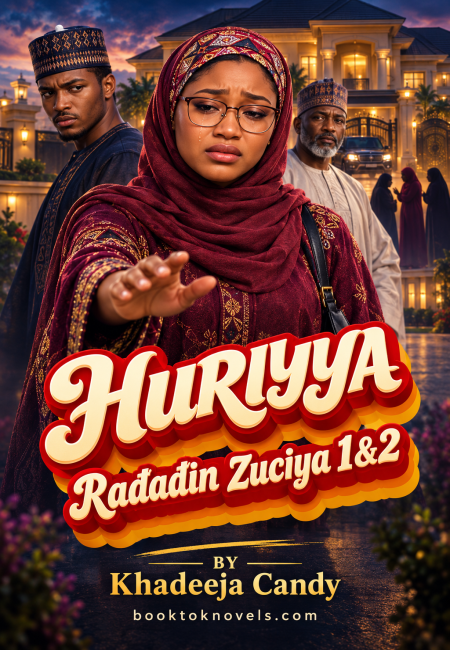






HURIYYA Raɗaɗin Zuciya 1&2
BY 𝐊𝐡𝐚𝐝𝐞𝐞𝐣𝐚 𝐂𝐚𝐧𝐝𝐲
Novel Pitch:
Hurriyya by Khadeeja Candy is an emotionally gripping Hausa family drama that explores the painful realities of polygamous marriage, sibling rivalry, betrayal, parental favoritism, and the silent suffering of a young girl whose extraordinary beauty hides a deeply personal struggle. Set against the backdrop of an affluent household in Gusau, Zamfara State, the novel introduces readers to a world where wealth commands respect, family relationships are complicated by jealousy, and the people who should offer protection can sometimes become the source of the deepest wounds. At the heart of the story is Hurriyya, a beautiful young girl whose life becomes increasingly complicated by her visual impairment, the hostility of her half-siblings, and the emotional turmoil unfolding between her parents. Her story is not simply about growing up in a wealthy family. It is about discovering the true meaning of love, enduring rejection, and finding the strength to survive when the security of home begins to crumble.
The story opens with the impressive residence of Alhaji Haruna Mai Yadi, a wealthy businessman whose success has earned him considerable recognition throughout Gusau and beyond. His magnificent compound, luxurious vehicles, carefully designed apartments, and flourishing businesses reflect a life that many would envy. Known for his automobile company, Mai Yadi Motors, and his investments in modern construction and imported goods, Haruna has transformed himself from a struggling man into a respected figure of considerable wealth. However, beneath the grandeur of his home lies a complicated family structure where affection, resentment, and rivalry compete for dominance. His wealth has provided his family with material comfort, but it has not given them the emotional stability necessary for genuine peace. Within the walls of this magnificent residence, every household has its own atmosphere, every wife has her own expectations, and every child occupies a different position in a family hierarchy shaped by favoritism, pride, and unresolved grievances.
Alhaji Haruna's marriage to three women has created a household where harmony is often difficult to maintain. Hajiya Kaltume, the senior wife, enjoys her established position and is accustomed to having considerable influence over family affairs. Hajiya Nafisa, popularly known as Momy, comes from a wealthy background and frequently allows her family's social standing to influence her treatment of others. Amma, whose original name is Iyami, occupies a more vulnerable position. Before marrying Haruna, she worked as a domestic employee in his household, where her cooking skills, respectful nature, and personal qualities gradually attracted his attention. Their relationship eventually developed into a secret marriage, but the discovery of this union exposed her to humiliation, accusations, and relentless hostility from the other women. The transition from domestic worker to wife did not earn Iyami the acceptance she deserved. Instead, it made her a target of resentment, as those who once knew her in a subordinate position struggled to acknowledge her new status. Although Haruna's wealth could provide her with material security, it could not shield her from the cruelty of people determined to remind her of her humble beginnings.
Among all the children in the household, Hurriyya stands out because of her exceptional beauty and gentle disposition. She has inherited her mother's attractive features, possessing a striking appearance that distinguishes her from many of her half-siblings. Yet her beauty is accompanied by a visual impairment that makes her dependent on specially prescribed eyeglasses. Without them, faces become indistinct, familiar surroundings lose their clarity, and even simple activities can become challenging. Her glasses are not merely an accessory. They are essential to her independence, education, and ability to navigate the world around her. Her father has made considerable efforts to obtain appropriate glasses for her, demonstrating that he recognizes her needs and takes pride in her academic potential. Hurriyya, in turn, appreciates even the smallest gestures of kindness and has developed a particularly close relationship with him. Their bond provides her with moments of happiness in an environment where affection is not always freely shared. She is playful, expressive, and eager to please, but her dependence on others also leaves her vulnerable to the people who choose to exploit her limitations.
Despite the apparent advantages of being Alhaji Haruna's daughter, Hurriyya experiences a painful form of isolation within her own family. Her half-siblings frequently tease her, provoke her, and treat her visual impairment as an inconvenience rather than a condition deserving patience and understanding. The hostility is particularly troubling because it comes from children who share the same father and live under the same roof. Instead of enjoying the natural comfort of sibling companionship, Hurriyya often finds herself defending her dignity against people who should be among her closest allies. Yassar, her older half-brother, offers a welcome contrast. He treats her with affection, playfully teases her without the same cruelty displayed by others, and frequently steps in when she needs protection. His willingness to show kindness demonstrates that biological relationships and family hierarchy do not automatically determine a person's character. In a household where jealousy is encouraged and compassion is often selective, Yassar becomes one of the few people who allows Hurriyya to feel accepted without constantly having to defend herself.
Her relationship with Hamad, her younger full brother, is considerably more difficult. Although the two children share the same mother, they frequently clash over seemingly minor disagreements that escalate into serious confrontations. Hamad is stubborn, quick-tempered, and unwilling to accept correction, even when it comes from his parents or older siblings. His behaviour places additional pressure on Amma, who repeatedly tries to teach both children the importance of love, respect, and peaceful coexistence. However, her efforts are complicated by the emotional burdens she carries as a woman who has endured years of mistreatment in her marriage. Her greatest concern is not simply that her children argue. She fears that their inability to love and protect one another will leave them dangerously exposed in a household where she has never felt entirely secure. Her repeated warnings to them reveal a mother who understands that family circumstances can change suddenly and that the bond between siblings may become their most important source of protection.
That fear becomes painfully relevant when Haruna's behaviour toward Amma changes without a clear explanation. The man who once welcomed her presence, appreciated her cooking, and treated her with tenderness begins to withdraw emotionally. His sudden coldness leaves her confused, especially when he starts making decisions that undermine the routines and privileges she has come to understand as part of their marriage. The emotional distance becomes impossible to ignore when he arranges for Kaltume to change the bedsheets in his bedroom, despite Amma being responsible for the household's meals and domestic arrangements at that time. What might appear to be an ordinary domestic disagreement carries a much more disturbing meaning for Amma. It signals that something fundamental has shifted in her husband's feelings, even though he refuses to explain himself.
When Haruna finally summons her and presents her with documents transferring ownership of a house in Samaru into her name, alongside a cheque for twenty million naira, Amma struggles to understand what is happening. The gifts initially appear generous, but his explanation transforms them into something far more painful. He admits that he has been experiencing overwhelming discomfort and anxiety whenever her turn to manage his household responsibilities arrives. Rather than confronting whatever has changed in him or attempting to restore their former relationship, he has decided to separate himself from her. His insistence that she leave his home while abandoning the children in his care makes the situation even more devastating. Amma is not simply being deprived of her marriage. She is being asked to leave behind the two children around whom her life has revolved, while carrying another child in her womb.
The scene marks a profound emotional turning point. Amma attempts to understand whether she has committed an offence serious enough to justify such treatment, but Haruna insists that she has done nothing wrong. His explanation offers no meaningful closure, leaving her to confront the possibility that a marriage can collapse even when one partner cannot identify the mistake that caused it. The house and money he gives her may provide financial independence, but they cannot replace the emotional security of her marriage or erase the anguish of being separated from her children. Her quiet prayer for strength reveals the depth of her distress and her determination to seek comfort in her faith when human relationships fail her. Rather than allowing grief to destroy her completely, she attempts to compose herself and prepare for the uncertain future awaiting her.
When Hurriyya and Hamad return from school, Amma conceals the true reason for her departure. She tells them that she is unwell and intends to stay with their grandmother until after the birth of her baby. Her decision to withhold the truth reflects the difficulty of explaining adult heartbreak to children who are still struggling to understand their own family relationships. She also uses the moment to plead with them to abandon their constant quarrelling and learn to care for each other. While Hurriyya accepts the explanation with a mixture of concern and innocence, Hamad becomes unusually quiet, suggesting that he may sense something deeper than his mother is willing to reveal. Amma eventually leaves, carrying her belongings and the pain of a separation that her children do not yet fully comprehend.
The consequences of her departure quickly become apparent. Without their mother to supervise their routines, Hurriyya and Hamad are left to navigate the household's complicated relationships with even less protection. Their familiar arguments continue, and a disagreement over Hamad's refusal to accept his sister's intervention escalates into a cruel act. In anger, Hamad removes Hurriyya's eyeglasses, throws them to the floor, and deliberately breaks them. The destruction of her glasses leaves her struggling to see clearly, turning an ordinary domestic quarrel into a frightening experience. Unable to distinguish her surroundings properly, she makes her way toward Hajiya Kaltume's apartment in search of help. Instead of receiving immediate compassion, she encounters further humiliation when Musib, one of Momy's sons, strikes her for entering without realizing who is standing nearby. Her visual impairment, which should inspire greater understanding, becomes another reason for people to mistreat her.
Yassar's intervention provides a brief moment of relief as he comforts Hurriyya and challenges the cruelty directed toward her. Yet his support cannot erase the broader reality of the household in which she lives. The same home that offers her luxurious surroundings, expensive possessions, and access to a good education also exposes her to rejection, emotional neglect, and the consequences of adult conflicts she did not create. Her father's affection has given her a sense of belonging, but her mother's absence threatens to remove one of the most important sources of emotional stability in her life. With Amma gone and her relationship with Hamad deteriorating, Hurriyya faces the prospect of growing up in a family where her needs may be overlooked whenever they conflict with the pride, anger, or ambitions of others.
The novel's central strength lies in the way it connects private family conflicts with larger questions about wealth, disability, motherhood, and personal responsibility. Alhaji Haruna's financial success demonstrates that prosperity can transform a person's social position without necessarily resolving the emotional weaknesses that shape their decisions. His household is a study in contrasts: luxury exists alongside cruelty, authority alongside vulnerability, and family unity alongside deep-seated division. Hajiya Kaltume and Momy's rivalry illustrates how social status and insecurity can influence the treatment of others, while Amma's experience exposes the emotional cost of entering a relationship in which acceptance is conditional. Her story also challenges the assumption that financial compensation can adequately address the pain caused by abandonment. A house and a substantial cheque may offer practical security, but they cannot replace companionship, trust, or the comfort of raising one's children.
Hurriyya's visual impairment introduces another important dimension to the narrative. Her struggles reveal how a disability can become more burdensome when surrounded by people who lack empathy. The broken glasses symbolize more than a damaged possession. They represent the fragility of her independence and the ease with which another person's anger can disrupt her daily life. Her experience raises difficult questions about the responsibilities families have toward vulnerable members and the damage caused when children learn to associate power with intimidation rather than protection. Through Hurriyya, the story invites readers to consider the difference between seeing a person's physical limitations and recognizing their emotional needs. Although her eyesight may prevent her from seeing faces clearly without assistance, the people around her often fail to see the loneliness and fear hidden beneath her cheerful personality.
The setting in Gusau, particularly the wealthy residential environment of Millions Quarters, strengthens the contrast between outward success and private suffering. The impressive homes and expensive lifestyles establish the family's privileged position, while the conflicts inside those homes reveal how little material prosperity can do to guarantee happiness. The novel belongs primarily to the genres of Hausa family drama, domestic fiction, and emotional social drama, with elements of polygamous-marriage conflict, sibling rivalry, and coming-of-age storytelling. Its narrative is driven by relationships rather than external adventure, allowing ordinary domestic incidents to expose deeper emotional wounds. A disagreement over food, a change of bedsheets, or a broken pair of glasses becomes significant because each incident reveals another layer of the characters' personalities and the unstable relationships connecting them.
At its core, Hurriyya examines the meaning of motherhood and the sacrifices women make to preserve their children's well-being. Amma's decision to conceal the circumstances of her departure shows how a mother may attempt to protect her children from emotional pain even while enduring that pain herself. Her repeated prayers and concern for the relationship between Hurriyya and Hamad reveal that her greatest fear extends beyond the collapse of her marriage. She worries about what will happen to her children when she is no longer present to guide them. The novel also explores sibling responsibility, showing how the absence of affection can turn ordinary childhood disagreements into acts of lasting cruelty. Hurriyya and Hamad are both young, but their behaviour suggests that unresolved anger and a lack of mutual respect can damage relationships long before the individuals involved fully understand the consequences.
Another significant theme is the difference between material privilege and genuine emotional security. Hurriyya has access to opportunities that many children might envy, including her father's willingness to support her education and provide for her special needs. Nevertheless, those advantages do not protect her from humiliation or loneliness. Similarly, Amma receives financial assets at the moment her marriage begins to collapse, but her distress demonstrates that money cannot compensate for the loss of a family life she values. Through these parallel experiences, the narrative questions the assumption that wealth automatically produces happiness. It suggests that the quality of human relationships, the willingness to accept responsibility, and the ability to treat others with dignity are equally important foundations of a meaningful life.
The key characters are introduced through their actions, choices, and relationships. Hurriyya is the emotional centre of the story, a beautiful, affectionate, and academically promising girl whose visual impairment makes her particularly dependent on understanding and responsible family members. Amma, formerly known as Iyami, is a resilient mother whose humble beginnings and troubled marriage have shaped her determination to care for her children. Alhaji Haruna Mai Yadi is a wealthy businessman whose affection for his children contrasts with the confusing and painful decision he makes regarding Amma. Hajiya Kaltume represents the authority and insecurity associated with her position as the senior wife, while Momy brings another dimension of rivalry through her pride in her family's wealth and social standing. Yassar emerges as a compassionate older brother who refuses to follow the cruelty displayed by some members of the household. Hamad, despite his mother's efforts to guide him, struggles with anger and disrespect, while Musib's treatment of Hurriyya exposes the harmful consequences of prejudice and impatience. Together, these characters create a family environment in which loyalty, resentment, affection, and cruelty continually collide.
The deeper insight offered by Hurriyya is that a person's greatest struggles may occur in the very place where they expect to feel safest. It challenges readers to look beyond appearances, question the fairness of family hierarchies, and recognize that children often bear the consequences of decisions made by adults. It also illustrates how small acts of kindness can become powerful sources of comfort in an environment dominated by hostility. Yassar's willingness to defend Hurriyya, Amma's persistent attempts to teach her children love, and Hurriyya's natural gratitude for her father's gestures all demonstrate the importance of compassion. At the same time, the story warns that affection cannot thrive indefinitely where disrespect is tolerated and vulnerable people are repeatedly made to feel like outsiders.
As the narrative unfolds, the most compelling questions concern the future of Amma's children and the consequences of Haruna's unexplained emotional withdrawal. Will Amma's departure expose Hurriyya and Hamad to even greater hardship? Can Hurriyya preserve her confidence and pursue her ambitions in a household where some people treat her vulnerability as a weakness? Will Hamad recognize the damage caused by his behaviour before he loses the trust of the sister who continues to seek a relationship with him? And what lies behind the sudden change in Haruna's attitude toward the woman he once cherished? These unanswered questions establish a foundation of suspense that encourages readers to look beyond the immediate conflicts and consider the consequences that may emerge as the family relationships continue to unravel.
Hurriyya is ultimately a moving exploration of the hidden pain behind a wealthy family's public image. It brings together the emotional struggles of a rejected wife, the vulnerability of a visually impaired girl, the destructive power of sibling hostility, and the complicated responsibilities of parenthood. Khadeeja Candy builds a narrative in which love is never entirely separate from pain and where the meaning of family is tested by the choices its members make. Readers who enjoy emotionally rich Hausa novels filled with domestic tension, complicated relationships, moral lessons, and deeply personal struggles will find a compelling reason to follow Hurriyya's journey. The story promises not merely to entertain but also to provoke reflection on the importance of kindness, the consequences of neglect, and the enduring strength required to face rejection without surrendering one's dignity.
At the heart of the novel is a sobering thought: a beautiful home cannot guarantee a peaceful life, and sharing the same blood does not always mean sharing the same compassion. Hurriyya's world is filled with people who can see her physical appearance, yet too few seem willing to understand the difficulties she faces. Amma has spent years trying to secure happiness for her children, only to discover that the future may demand sacrifices she never imagined making. Their struggles leave readers with a question that lingers long after the opening chapters: when the people who are supposed to protect a family become the source of its deepest wounds, where can the most vulnerable members turn for safety, love, and hope?