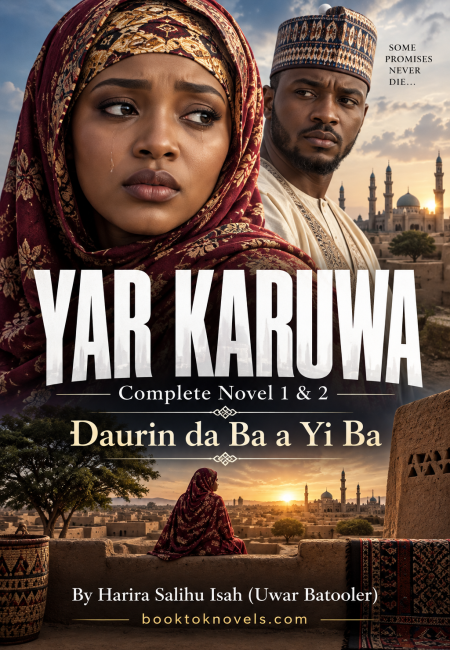
Banafsha is about twenty, kneeling on the floor in front of her mother, begging her to change her life. The word she is trying to escape follows her through every street in her neighbourhood. Children and adults alike call her ‘Yar Karuwa, and what began as a whispered insult has become something said to her face. This is where ‘Yar Karuwa, the Hausa novel by Harira Salihu Isah, who writes as Uwar Batoorl, begins.
The opening scene is a confrontation, and neither side is a simple villain. Banafsha pleads with her mother, whom she calls Mami, to think of her own dignity and her daughter’s, and to remember that death can arrive at any hour. Mami answers with a slap and a defence of her own. She insists that what she does is a trade, not prostitution, and she points to what it has paid for: the house, Banafsha’s schooling, her food, her clothes, her medicine. If she stopped, she asks, who would provide? She argues that even domestic work or begging would expose them to men who would try to ruin them. Banafsha’s reply is that she would rather live on charity, hawk goods in the street, or leave town to find relatives on either side of her family. She wants her mother’s name and her own back more than she wants comfort. Mami answers with blows, and the scene ends only because a neighbour comes in to pull them apart.
What makes this opening hard to dismiss is that the two women are arguing about survival from opposite ends. The mother believes her choices have protected her child. The daughter believes those same choices have taken away her place in her community. The excerpt does not settle which of them is right, and it does not pretend the question is easy. It also shows how this argument has become routine, a quarrel that comes in the morning if it did not come the night before.
Outside that house, Banafsha has very little. Her best friend Umaima and Umaima’s mother, Ummu, are the only people in the neighbourhood who treat her gently, and even in their home one member of the family resents her. Ummu soothes her and tells her she will marry, and that it will be a marriage not every girl is given. Banafsha refuses the comfort. She asks who would marry the daughter of such a woman, says she has come to dislike men, and says that even if someone did marry her, she would be reminded of her mother’s reputation for the rest of her life. That conversation sets up the question the rest of the story seems built around: can a young woman be separated from a name she did not choose?
The second book shows how that question plays out in public. On a day when several couples are being wed at a mosque, the family of Banafsha’s groom, Aliyu, whom the text also calls Malam Abbo, fails to appear. The two elders who are acting for her, Alhaji and Abbaa, grow uneasy as the ceremonies go on. When the groom’s uncle finally calls them outside, he delivers the news that the family has withdrawn. The reasons given are that the bride’s father is unknown, that she was not born in the way of the Sunna, and that her mother’s past is the cause. The uncle admits he is only repeating what he was sent to say. Abbaa answers with a warning about the consequences of humiliating someone, and Alhaji, usually calm, can barely speak.
The two men then have to decide what to do with what they now know. Alhaji wishes he had full authority over Banafsha, because he would have married her to Bunayd. He recognises that she has not been asked and that it would be unfair to act on her behalf. Abbaa thinks of his own son, Danish, who cares for her. They agree to hold the news back for now and quietly ask the imam not to read out the cancelled couple’s names. At the same time, the ceremony reaches the marriage of Alhaji Mukhtar Sule Kwalli and Ramla Hashim Abubakar. Bunayd, who knows nothing of what has just happened, adds a car key to the dowry, and the mosque ends in gunfire, laughter and celebration. The narrator’s playful voice stays close to the crowd, while Abbaa quietly wonders how Alhaji is connected to the soldier who once paid a hospital bill for Banafsha’s mother.
The story also follows Aliyu himself. His brother phones to say only that their father, Abiy, wants to see him immediately. Aliyu leaves his friends and the waiting bride’s family and drives home recklessly, only to hear that the marriage he was about to enter has been cancelled. The excerpt ends in the pause after Abiy says his name, with Aliyu repeating the word “cancelled” to himself and unable to take it in.
Taken together, the two books make a story about reputation, but not only about reputation. The first shows how a name is built by a community, one insult at a time. The second shows what happens when that name reaches the people who are about to stake a family’s honour on a marriage. Between them are several adults who are trying to protect Banafsha without being sure how. The narrator moves between solemn moments and warm humour, so the novel reads like a story told by someone who knows her audience, and it is suited to readers who enjoy Hausa romance and family drama where social pressure and personal feeling collide.
Many questions are left open by what is available here. Banafsha has said she will never marry, yet a wedding has been arranged for her. Her mother’s work, and whether she can or will change it, remains unresolved. Abbaa has not yet told Alhaji what he has noticed. And no one knows yet who will tell Banafsha why her wedding did not happen.
Open ‘Yar Karuwa on Booktoknovels.com and find out what Banafsha learns, and what she decides to do with it: [‘Yar Karuwa Complete Novel 1 & 2 by Uwar Batoorl | Hausa Novel] https://booktoknovels.com/







THE COMPLETE NOVEL INTRODUCTION
Banafsha is about twenty, kneeling on the floor in front of her mother, begging her to change her life. The word she is trying to escape follows her through every street in her neighbourhood. Children and adults alike call her ‘Yar Karuwa, and what began as a whispered insult has become something said to her face. This is where ‘Yar Karuwa, the Hausa novel by Harira Salihu Isah, who writes as Uwar Batoorl, begins.
The opening scene is a confrontation, and neither side is a simple villain. Banafsha pleads with her mother, whom she calls Mami, to think of her own dignity and her daughter’s, and to remember that death can arrive at any hour. Mami answers with a slap and a defence of her own. She insists that what she does is a trade, not prostitution, and she points to what it has paid for: the house, Banafsha’s schooling, her food, her clothes, her medicine. If she stopped, she asks, who would provide? She argues that even domestic work or begging would expose them to men who would try to ruin them. Banafsha’s reply is that she would rather live on charity, hawk goods in the street, or leave town to find relatives on either side of her family. She wants her mother’s name and her own back more than she wants comfort. Mami answers with blows, and the scene ends only because a neighbour comes in to pull them apart.
What makes this opening hard to dismiss is that the two women are arguing about survival from opposite ends. The mother believes her choices have protected her child. The daughter believes those same choices have taken away her place in her community. The excerpt does not settle which of them is right, and it does not pretend the question is easy. It also shows how this argument has become routine, a quarrel that comes in the morning if it did not come the night before.
Outside that house, Banafsha has very little. Her best friend Umaima and Umaima’s mother, Ummu, are the only people in the neighbourhood who treat her gently, and even in their home one member of the family resents her. Ummu soothes her and tells her she will marry, and that it will be a marriage not every girl is given. Banafsha refuses the comfort. She asks who would marry the daughter of such a woman, says she has come to dislike men, and says that even if someone did marry her, she would be reminded of her mother’s reputation for the rest of her life. That conversation sets up the question the rest of the story seems built around: can a young woman be separated from a name she did not choose?
The second book shows how that question plays out in public. On a day when several couples are being wed at a mosque, the family of Banafsha’s groom, Aliyu, whom the text also calls Malam Abbo, fails to appear. The two elders who are acting for her, Alhaji and Abbaa, grow uneasy as the ceremonies go on. When the groom’s uncle finally calls them outside, he delivers the news that the family has withdrawn. The reasons given are that the bride’s father is unknown, that she was not born in the way of the Sunna, and that her mother’s past is the cause. The uncle admits he is only repeating what he was sent to say. Abbaa answers with a warning about the consequences of humiliating someone, and Alhaji, usually calm, can barely speak.
The two men then have to decide what to do with what they now know. Alhaji wishes he had full authority over Banafsha, because he would have married her to Bunayd. He recognises that she has not been asked and that it would be unfair to act on her behalf. Abbaa thinks of his own son, Danish, who cares for her. They agree to hold the news back for now and quietly ask the imam not to read out the cancelled couple’s names. At the same time, the ceremony reaches the marriage of Alhaji Mukhtar Sule Kwalli and Ramla Hashim Abubakar. Bunayd, who knows nothing of what has just happened, adds a car key to the dowry, and the mosque ends in gunfire, laughter and celebration. The narrator’s playful voice stays close to the crowd, while Abbaa quietly wonders how Alhaji is connected to the soldier who once paid a hospital bill for Banafsha’s mother.
The story also follows Aliyu himself. His brother phones to say only that their father, Abiy, wants to see him immediately. Aliyu leaves his friends and the waiting bride’s family and drives home recklessly, only to hear that the marriage he was about to enter has been cancelled. The excerpt ends in the pause after Abiy says his name, with Aliyu repeating the word “cancelled” to himself and unable to take it in.
Taken together, the two books make a story about reputation, but not only about reputation. The first shows how a name is built by a community, one insult at a time. The second shows what happens when that name reaches the people who are about to stake a family’s honour on a marriage. Between them are several adults who are trying to protect Banafsha without being sure how. The narrator moves between solemn moments and warm humour, so the novel reads like a story told by someone who knows her audience, and it is suited to readers who enjoy Hausa romance and family drama where social pressure and personal feeling collide.
Many questions are left open by what is available here. Banafsha has said she will never marry, yet a wedding has been arranged for her. Her mother’s work, and whether she can or will change it, remains unresolved. Abbaa has not yet told Alhaji what he has noticed. And no one knows yet who will tell Banafsha why her wedding did not happen.
A girl can be forgiven for a mistake she made, but what can be done about a sentence that was written before she was born?
Open ‘Yar Karuwa on Booktoknovels.com and find out what Banafsha learns, and what she decides to do with it: [‘Yar Karuwa Complete Novel 1 & 2 by Uwar Batoorl | Hausa Novel] https://booktoknovels.com/